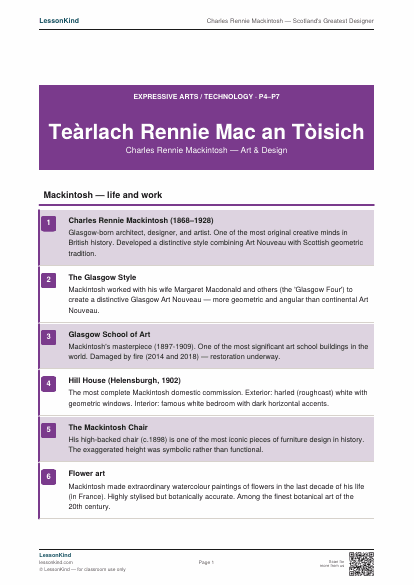
About this resource
A P4–P7 art and design resource on Charles Rennie Mackintosh — his distinctive style, the Glasgow School, his architecture (Glasgow School of Art, Hill House), his graphic design, and how to create Mackintosh-inspired art.
What's included
- Print-ready PDF — A4 and US Letter compatible
- No sign-up required — download instantly
- Free to use in your classroom
More like this
More Art resources

Lines and Shapes — Elements of Art
Practice the basic line types and shapes that make up every drawing.

Color Wheel Activity
Mix and label primary, secondary and tertiary colors on a printable color wheel.

Pattern and Texture Practice
Eight pattern boxes for students to fill in. Develops mark-making and visual rhythm.

Sketching Tone — 5 Pencil Pressures
Practice five tonal values from lightest to darkest on a printable grid. Then apply to a sphere.

One-Point Perspective Drawing
Step-by-step perspective drawing tutorial. Draw a road, a row of buildings, and a checkerboard floor.

Famous Artists Fact File
Eight major artists from different eras with one signature work and key style notes for each.
This page contains affiliate links. We may earn a commission at no extra cost to you.
Free Age-Appropriate Activities — Discount School Supply
Discount School Supply offers thousands of free downloadable activities alongside top-rated art and classroom supplies — perfect for lesson planning and cover days.
Get Free Classroom Activities →Stay Safe Online with NordVPN
Protect your connection on school networks and at home. NordVPN is trusted by millions — recommended for teachers and students alike.
Get NordVPN →