EYFS & early years · 5 min read
Observing Schemas in Action: Real Examples From EYFS Classrooms
What schematic play actually looks like — and how to document it
Schemas are easier to understand in theory than to spot in practice. Here are real examples of each main schema and how practitioners can document and extend them.
Free bundle for this topic
EYFS Essentials Pack
8 essentials for Reception and Kindergarten — provision, observation tools and activity cards.
Practical resources for this
Take this further
Printable, classroom-ready resources for the topics in this article.
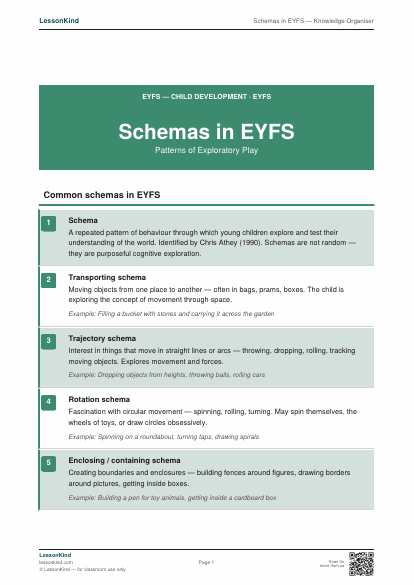
Schemas in EYFS — Knowledge Organiser
A practitioner knowledge organiser on Athey's schemas — the repeated patterns of behaviour that young children use to explore the world, how to identify schemas, and how to plan provision that supports and extends them.
Schemas in EYFS — Knowledge Organiser
A practitioner knowledge organiser on schemas in EYFS — what they are, common schemas (transporting, rotating, enclosing), and how to support schema play in provision.
Going deeper
Books for eyfs & early years in primary schools
Books we'd recommend on the topics raised in this article.
Recommended reading
Convenience links to Amazon. As an Amazon Associate we earn from qualifying purchases at no extra cost to you. Read our affiliate disclosure.
Keep reading
EYFS & early years
Characteristics of Effective Learning: A Practical Guide
The Characteristics of Effective Learning (CoEL) underpin every area of the EYFS. Here's what they actually look like in practice and how to use them in assessment.
5 min read
EYFS & early years
The First Weeks: Settling Children Into Reception
The first weeks of Reception set the emotional tone for the year — and beyond. Here's what helps children settle securely.
5 min read