Teaching strategy · 5 min read
SESE: Teaching Social and Environmental Education in Irish Primary Schools
The unique subject that combines History, Geography, and Science — and how to teach it well
SESE is one of Ireland's most distinctive curriculum features — an integrated approach to History, Geography, and Science that few other countries attempt. Here's how to make it work.
Practical resources for this
Take this further
Printable, classroom-ready resources for the topics in this article.
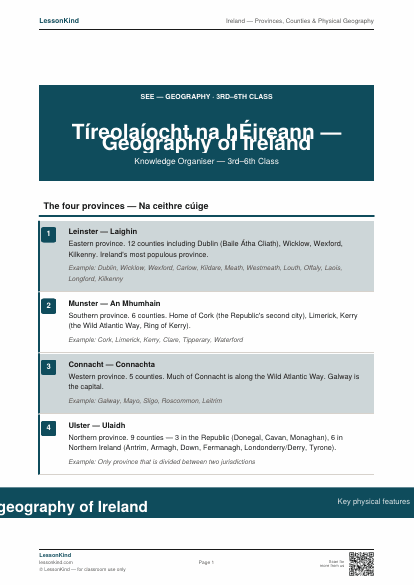
Ireland — Provinces, Counties & Physical Geography
A 3rd–6th Class knowledge organiser on Irish geography — the four provinces, 32 counties (26 Republic + 6 Northern Ireland), major rivers, mountain ranges, and physical features of the island of Ireland.
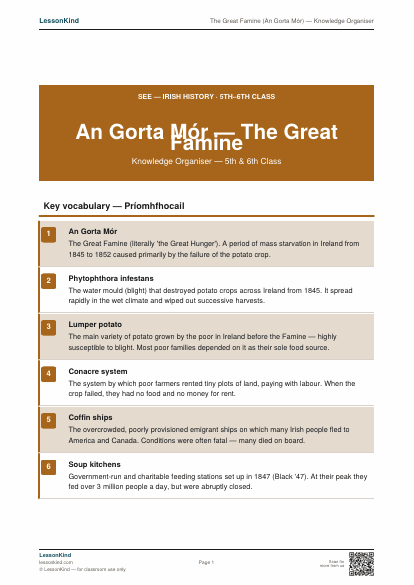
The Great Famine (An Gorta Mór) — Knowledge Organiser
A KS2/5th–6th Class knowledge organiser on the Irish Great Famine (1845–1852) — causes, the failure of the potato crop, British policy, emigration, and the lasting impact on Ireland and Irish communities worldwide.
Going deeper
Books on teaching strategy
Books we'd recommend on the topics raised in this article.
For teachers
Convenience links to Amazon. As an Amazon Associate we earn from qualifying purchases at no extra cost to you. Read our affiliate disclosure.
Keep reading
Teaching strategy
Teaching RE in Primary: A Guide for Non-Specialists
Most primary RE is taught by non-specialists. Here's how to teach it well — including how to handle sensitive questions, how to avoid common mistakes, and where to find reliable resources.
6 min read
Teaching strategy
Teaching RE as a Non-Specialist: A Practical Guide
RE is one of the few subjects where the teacher's personal beliefs are genuinely relevant — and potentially complicated. Here's how to teach it confidently, fairly, and engagingly regardless of your own position.
5 min read