Teaching strategy · 5 min read
Welsh Language Progression in Primary Schools: What to Expect by Year Group
What Welsh language competence looks like at each stage of primary — and how to support pupils who are behind
The Curriculum for Wales sets out Welsh language progression across four stages. Here's what pupils should be able to do in Welsh by the end of each stage and how to support those who are struggling.
Practical resources for this
Take this further
Printable, classroom-ready resources for the topics in this article.
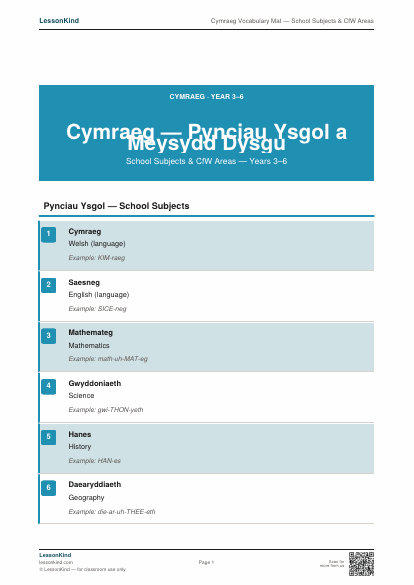
Cymraeg Vocabulary Mat — School Subjects & CfW Areas
A bilingual Welsh/English vocabulary mat for Years 3–6: school subject names and Curriculum for Wales Areas of Learning in Welsh — so teachers and pupils can refer to their subjects in Welsh throughout the day.
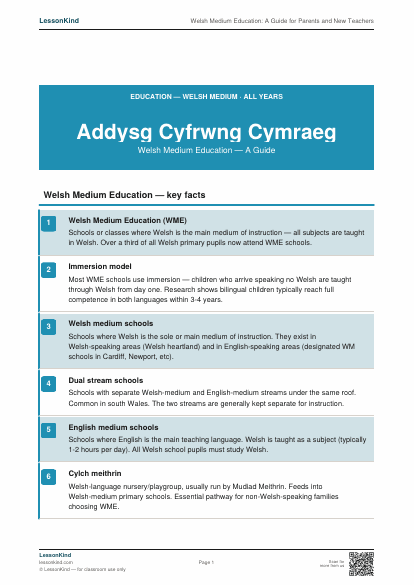
Welsh Medium Education: A Guide for Parents and New Teachers
A clear guide to Welsh Medium Education (WME) — schools where everything is taught through Welsh — what they are, how they work, language immersion in practice, and outcomes for pupils.
Going deeper
Welsh language teaching resources
Books we'd recommend on the topics raised in this article.
For teachers
Convenience links to Amazon. As an Amazon Associate we earn from qualifying purchases at no extra cost to you. Read our affiliate disclosure.
Keep reading
Teaching strategy
Teaching Welsh in English-Medium Schools: What Works
Welsh is compulsory for all pupils in Wales to age 16, but most English-medium primary teachers are not fluent Welsh speakers. Here's what experienced practitioners say works.
5 min read
Teaching strategy
Running an Eisteddfod in Your School: A Complete Guide
The Eisteddfod is Wales's most distinctive cultural institution. Running a school Eisteddfod well takes planning, but the impact on Welsh language, culture, and community is significant. Here's how.
5 min read