About this resource
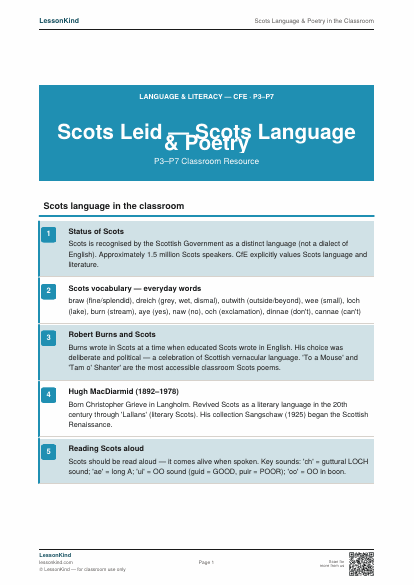
A P3–P7 Language resource on using Scots language and poetry in the classroom — key Scots vocabulary, poems by Robert Burns and Hugh MacDiarmid, how to read Scots aloud, and links to CfE literacy.
What's included
- Print-ready PDF — A4 and US Letter compatible
- No sign-up required — download instantly
- Free to use in your classroom
More like this
More Languages resources

French Greetings & Farewells — Vocabulary Mat
12 essential French greetings and farewells with phonetic pronunciation guide for non-specialist teachers.

French Numbers 1–20
French numbers 1 to 20 with phonetic guide. Includes counting song, number bingo template and quick-fire game ideas.

French Classroom Instructions
20 essential French classroom commands so children hear and respond to French routinely — silence, listen, write, repeat, etc.

Spanish Greetings & Farewells
Essential Spanish greetings and farewells with phonetic guide. Use as a vocabulary mat or quick reference poster.

Spanish Numbers 1–20
Spanish numbers 1 to 20 with phonetic guide and three teaching games.

Spanish Colors
10 Spanish colors with pronunciation and a color-by-number activity.
This page contains affiliate links. We may earn a commission at no extra cost to you.
Stay Safe Online with NordVPN
Protect your connection on school networks and at home. NordVPN is trusted by millions — recommended for teachers and students alike.
Get NordVPN →