About this resource
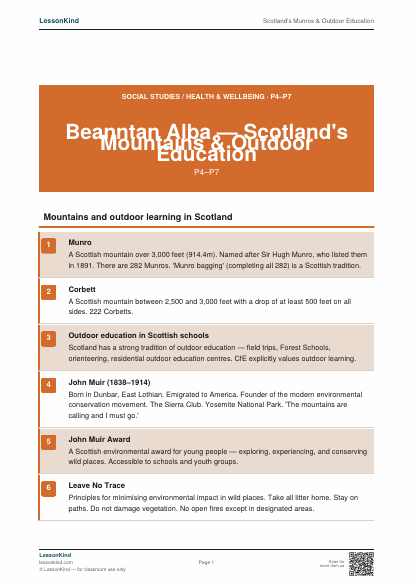
A P4–P7 Social Studies and PE resource on Scotland's Munros (mountains over 3,000 feet), the outdoor education tradition, John Muir, Duke of Edinburgh Award, and how Scottish geography supports outdoor learning.
What's included
- Print-ready PDF — A4 and US Letter compatible
- No sign-up required — download instantly
- Free to use in your classroom
More like this
More PE & Health resources

Warm-Up Activity Cards
Eight 5-minute warm-up games — print, cut and pull one at the start of every PE lesson.

The Healthy Plate
Sort foods into the five food groups and design your own healthy plate.

Multi-Skills Station Plan
Six PE stations — throwing, catching, balance, agility, kicking, dribbling. 5 minutes each.

Sports Skills Assessment Checklist
Teacher's tick-list to assess core sports skills across throwing, catching, balance and game play.

Cool-Down Stretches Poster
Eight key stretches with body part, hold time and teaching points.

Personal Fitness Plan Template
Students design their own 4-week fitness plan with goals, activities and reflection space.
This page contains affiliate links. We may earn a commission at no extra cost to you.
Stay Safe Online with NordVPN
Protect your connection on school networks and at home. NordVPN is trusted by millions — recommended for teachers and students alike.
Get NordVPN →