About this resource
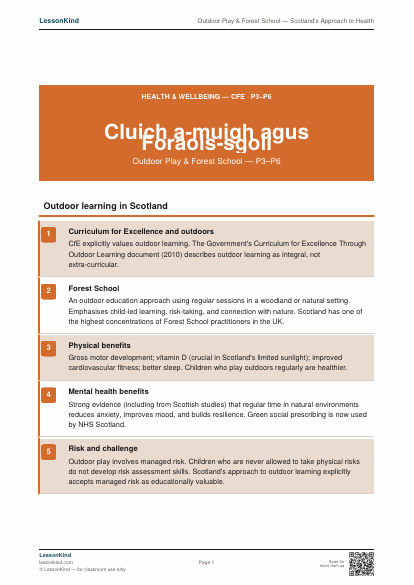
A P3–P6 Health & Wellbeing resource on outdoor play, Forest School, and Scotland's commitment to outdoor learning — benefits for health, wellbeing, and development.
What's included
- Print-ready PDF — A4 and US Letter compatible
- No sign-up required — download instantly
- Free to use in your classroom
More like this
More PE & Health resources

Warm-Up Activity Cards
Eight 5-minute warm-up games — print, cut and pull one at the start of every PE lesson.

The Healthy Plate
Sort foods into the five food groups and design your own healthy plate.

Multi-Skills Station Plan
Six PE stations — throwing, catching, balance, agility, kicking, dribbling. 5 minutes each.

Sports Skills Assessment Checklist
Teacher's tick-list to assess core sports skills across throwing, catching, balance and game play.

Cool-Down Stretches Poster
Eight key stretches with body part, hold time and teaching points.

Personal Fitness Plan Template
Students design their own 4-week fitness plan with goals, activities and reflection space.
This page contains affiliate links. We may earn a commission at no extra cost to you.
Stay Safe Online with NordVPN
Protect your connection on school networks and at home. NordVPN is trusted by millions — recommended for teachers and students alike.
Get NordVPN →