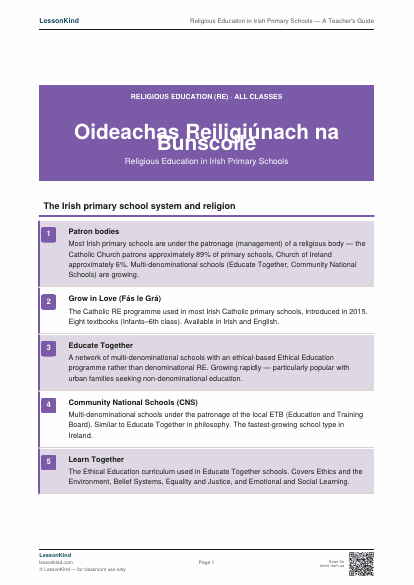
About this resource
Religious education in Irish primary schools — the different programmes (Grow in Love, Catholic, Church of Ireland, Educate Together, multi-denominational), patron bodies, and how to teach RE sensitively in a diverse modern Ireland.
What's included
- Print-ready PDF — A4 and US Letter compatible
- No sign-up required — download instantly
- Free to use in your classroom
More like this
More Religious Studies (RE) resources
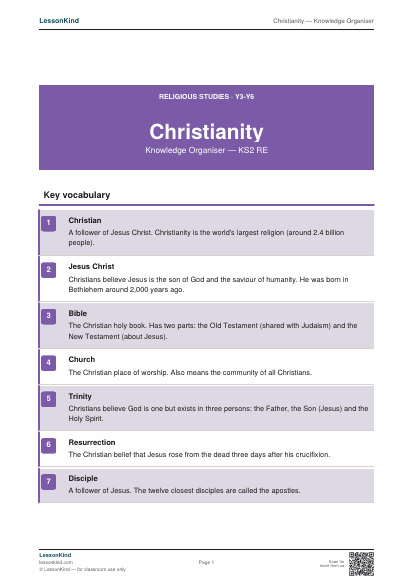
Christianity — Knowledge Organiser
Single-page reference for Christianity covering core beliefs, key figures, sacred text, festivals, places of worship and symbols. KS2 RE-curriculum aligned, suitable for community and faith schools.
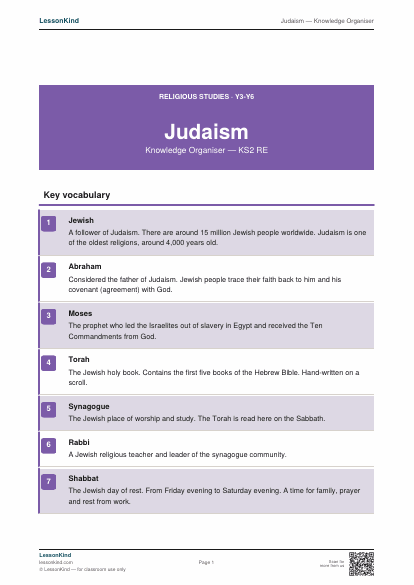
Judaism — Knowledge Organiser
Single-page reference for Judaism covering core beliefs, key figures, sacred text, festivals, places of worship and symbols. KS2 RE-curriculum aligned.
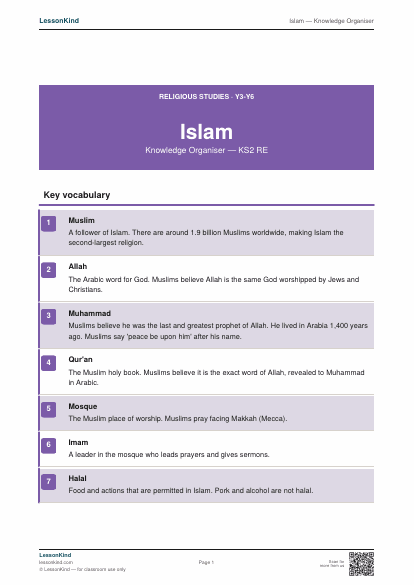
Islam — Knowledge Organiser
Single-page reference for Islam covering core beliefs, key figures, sacred text, festivals, places of worship and symbols. KS2 RE-curriculum aligned.
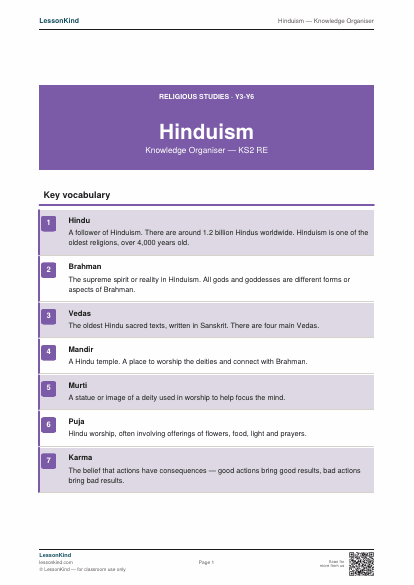
Hinduism — Knowledge Organiser
Single-page reference for Hinduism covering core beliefs, key figures, sacred texts, festivals, places of worship and symbols. KS2 RE-curriculum aligned.
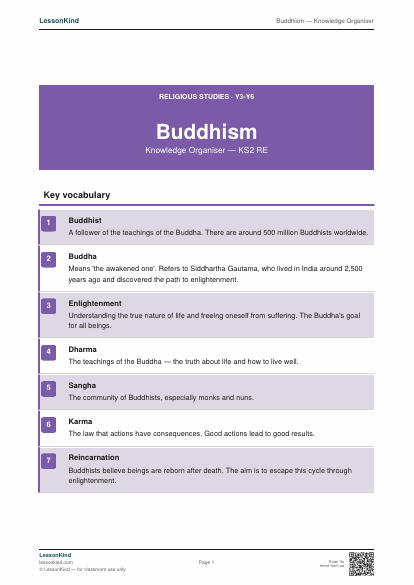
Buddhism — Knowledge Organiser
Single-page reference for Buddhism covering core teachings, the Buddha, sacred text, festivals, places of worship and symbols. KS2 RE-curriculum aligned.
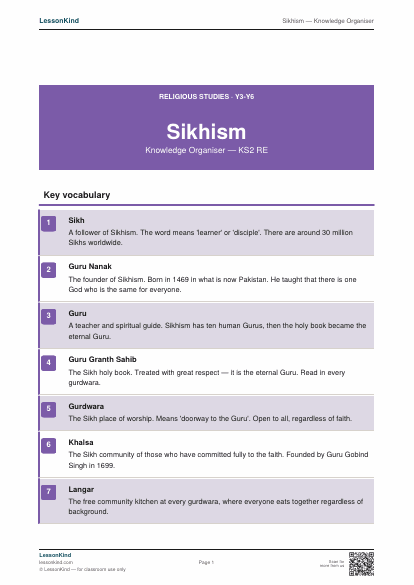
Sikhism — Knowledge Organiser
Single-page reference for Sikhism covering core beliefs, the Gurus, sacred text, festivals, places of worship and symbols. KS2 RE-curriculum aligned.
This page contains affiliate links. We may earn a commission at no extra cost to you.
Stay Safe Online with NordVPN
Protect your connection on school networks and at home. NordVPN is trusted by millions — recommended for teachers and students alike.
Get NordVPN →