About this resource
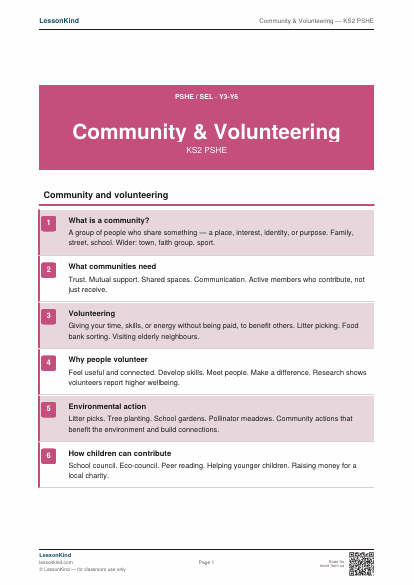
A KS2 PSHE knowledge organiser on community — what makes a community, belonging, volunteering, environmental action, and how children can contribute.
What's included
- Print-ready PDF — A4 and US Letter compatible
- No sign-up required — download instantly
- Free to use in your classroom
More like this
More PSHE & SEL resources

Feelings and Emotions — Vocabulary Mat
Twenty emotion words grouped by intensity. Helps children name and talk about feelings.

Friendship Rules
Eight friendship rules that build a kind, inclusive classroom culture.

Growth Mindset — Fixed vs Growth
Compare fixed-mindset and growth-mindset thinking. Rewrite negative self-talk.

Anti-Bullying Class Pledge
A class pledge poster — every child signs and it goes on the wall. Includes definitions of bullying types.

Mindfulness Breathing Techniques
Four kid-friendly breathing techniques to help students calm down or refocus.

Conflict Resolution — Using I-Statements
Turn finger-pointing into clear communication with the I-statement formula.
This page contains affiliate links. We may earn a commission at no extra cost to you.
Stay Safe Online with NordVPN
Protect your connection on school networks and at home. NordVPN is trusted by millions — recommended for teachers and students alike.
Get NordVPN →