Parent communication · 7 min read
How to Help Your Primary Child With Reading at Home
What actually makes a difference — and common mistakes to avoid
Published 2026-05-12
Reading with your child at home is one of the most impactful things you can do for their development. The research is unambiguous on this: children who are read to regularly, and who develop a habit of reading, have substantially better outcomes across multiple subjects — not just English.
But the approach matters enormously. Here is what actually helps, and some common approaches that are less effective than they might seem.
What makes the biggest difference
**Read aloud to your child — even when they can read independently.** This is the single most underused approach in homes where children are school-age. Many parents stop reading aloud once a child can read for themselves. This is a mistake. Reading aloud to a child exposes them to vocabulary, sentence structures, and ideas that are well beyond their independent reading level. It also creates positive associations with books and reading that are deeply valuable.
A 10-year-old can enjoy a parent reading from a complex, exciting novel — even if they couldn't read it themselves yet. This extends their vocabulary and comprehension far beyond what they can access independently.
**Let them choose what they read.** Control over reading choice is a significant predictor of reading for pleasure. A child who has chosen their book is more invested in it. Series work particularly well for reluctant readers — the familiarity of characters and world removes the barrier of entry that puts some readers off new books.
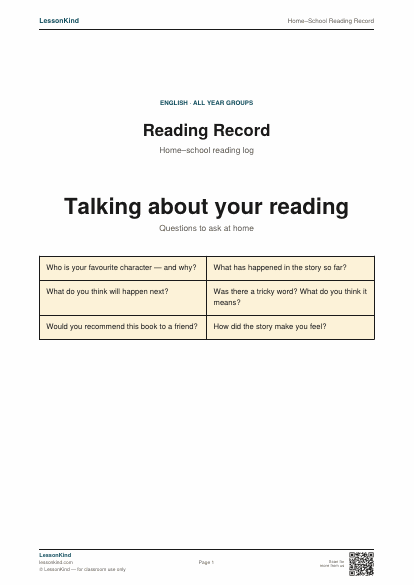
**Talk about what they're reading.** Not interrogation — conversation. 'What happened in your book?' 'Who's your favourite character?' 'What do you think is going to happen?' These questions build comprehension skills far more effectively than comprehension worksheets.
**Make books visible and accessible.** Children who grow up in homes with books read more. A small bookshelf in the bedroom, regular library visits, books as gifts — the physical presence of books matters.
Common approaches that are less effective
**Insisting on books above their level.** 'Easy' books are fine. A child who reads 20 easy books is building vocabulary, fluency, and love of reading. A child who struggles through one hard book that was chosen for them is building a negative association with reading. Let them read some things that feel comfortable.
**Correcting every mistake while they're reading.** When a child makes a small error while reading aloud, the instinct is to immediately correct it. But constant correction is dispiriting and breaks the flow. A better approach: if they've self-corrected, say nothing. If they've missed the meaning of a sentence, ask gently: 'Does that make sense?' Let them have a go at working it out before you supply the word.
**Treating reading as a school task rather than a pleasure.** Reading records and homework logs are useful, but if the only time reading happens in your home is when it's assigned, that's a problem. Reading for pleasure is different from reading for school. Both matter — but the pleasure reading habit is the one that lasts into adult life.
**Comparing your child to other children.** Reading development varies enormously. A child who is a less confident reader at 7 is not necessarily a less confident reader at 11. Anxiety about comparison can make struggling readers feel worse about reading — and reading more anxiously produces worse outcomes.
A word about struggling readers
If your child consistently avoids reading, finds it stressful, or is significantly behind their peers, talk to the teacher. There are specific, evidence-based interventions for children who struggle with reading. The causes vary — phonics gaps, processing differences, vocabulary deficits, fluency issues — and the right approach depends on the cause. A teacher can help identify what's going on and what will help.
The worst outcome is a child who has a fixable reading difficulty that isn't addressed because it was assumed to be a motivation problem.
Practical resources for this
Take this further
Printable, classroom-ready resources for the topics in this article.
Going deeper
Books to read aloud with primary children
If you're looking for books to read aloud with your child, these are reliable starting points — all are enjoyed by both children and adults.
Read-aloud classics (ages 5–8)
Read-aloud for ages 8–11
For parents: supporting children's reading
Convenience links to Amazon. As an Amazon Associate we earn from qualifying purchases at no extra cost to you. Read our affiliate disclosure.
Keep reading
Reading & literacy
What to Do When a Year 4 Child Still Can't Read
It happens in every primary school: a child arrives in Year 4 with reading two or three years behind. Here's what's likely going on, and what you can actually do about it.
9 min read
Reading & literacy
Whole-class vs guided reading: which one is right?
The pendulum on reading instruction has swung repeatedly between guided reading carousels and whole-class teaching. The argument matters because the wrong choice costs children months of progress. Here's an honest comparison.
8 min read
Reading & literacy
The Mystery of the Disappearing Readers
Reading-for-pleasure rates drop sharply between Year 2 and Year 6. Here's what's actually happening, and what teachers can do.
5 min read