Parent communication · 7 min read
When parents ask 'is my child gifted?'
What they're really asking, and how to answer well.
Published 2026-11-29
Sooner or later, every primary teacher gets the question. Sometimes at the school gate. Sometimes by email. Sometimes — most awkwardly — at a parents' evening with the rest of the conversation about phonics.
'Do you think my child might be gifted?'
The question puts you in a difficult spot. Say yes too quickly and you're making promises the data doesn't support. Say no and you risk a parent who feels their child is being underestimated and starts looking for a different school. Wave it away and you damage trust for the rest of the year.
There's a better way to handle it, and it starts by understanding what the parent is actually asking.
What 'gifted' means to a parent
'Gifted' is one of those words that has a precise educational definition (varying by country) and a much fuzzier popular meaning. Most parents using it aren't thinking of an IQ score. They mean something more like:
- 'My child seems to be ahead of their peers in something.' - 'My child is showing intense interest in a topic well beyond what we expected.' - 'My child says school is too easy.' - 'My child is bored.' - 'My child taught themselves something we didn't show them.'
These are real observations. They're not nothing. But they're also not necessarily 'gifted' in any technical sense — they could be developmental advance (early bloom that levels out), interest-driven specialisation, or just the visible part of normal variation.
The parent isn't usually wrong to notice something. They are usually overgeneralising what they noticed.
Why parents ask
The motivations are generally good and sometimes anxious.
The good motivation: they've noticed their child doing something interesting and want to support it. They want the school to know. They want to know what comes next.
The anxious motivation: they're worried the school is missing something. They've heard horror stories about gifted children getting bored and disengaging. They want assurance.
The mixed motivation: their child has been behaving badly and they're starting to wonder if 'bored' might be the explanation. (Sometimes it is. Often it isn't. We'll get to this.)
Knowing which motivation is in play helps you respond.
The dismissive response (don't)
The worst response is to wave it away. 'They're doing fine, no need to worry.' This signals to the parent that you haven't really thought about their child as an individual, and they leave the conversation feeling unheard. They will tell other parents. The school's reputation takes a small hit.
Almost as bad: the slightly snarky 'most parents think their child is gifted.' Even if it's true (it is), saying it makes the parent feel patronised and signals that you've put them in a category before listening to them.
The over-promising response (also don't)
The opposite trap is to agree too quickly. 'Yes, your child does seem advanced — we'll definitely make sure they're stretched.' Now you've made a promise. The parent will be checking. If their child does any worksheet that looks easy in the next term, you'll hear about it.
Worse, you've taught the child a story about themselves. Children who hear early that they're 'gifted' often develop a fixed identity that makes them avoid challenge — because failure threatens the label. Carol Dweck's research on this is solid: praising 'cleverness' rather than effort produces children who AVOID hard problems. Calling a child gifted, even when accurate, is risky.
A better script
Try something like this:
'Tell me what you've noticed at home. What kinds of things is X getting interested in?'
Listen carefully to the answer. You'll learn: - What the parent actually values about their child - What 'gifted' means to them in this case - Whether the observations match what you see in school
Then respond with what you genuinely see in the classroom. Specific examples. 'In maths, X is comfortable with the Year 4 work and seems to enjoy harder problems when I give them.' Or: 'In writing, X has a really sophisticated reading vocabulary that's starting to come through in their work.'
Be honest about the bits that are normal too. 'X's spelling is roughly where I'd expect for their age — that's not where I see the standout pattern.' This honesty is what makes your praise of the strong areas credible.
Then offer something concrete: 'I'm going to give X some open-ended tasks where they can take it as far as they want to. I'll be looking out for what they do with them.'
That sentence does several useful things: - It commits you to action without overpromising - It treats the child as an individual - It defers a final 'is X gifted?' answer until you have evidence - It gives the parent something to ask about in three weeks
When 'gifted' is the wrong frame
Sometimes the parent's question, decoded, isn't really about giftedness. It's about:
**'Is my child being challenged?'** This is a fair question and you should answer it. If a child is finishing tasks too quickly and looking bored, that's worth addressing — gifted or not. The fix is usually deeper questions and open-ended tasks, not faster movement to the next year's content.
**'My child is unhappy at school — could it be because they're not stretched?'** Possibly. More commonly, school unhappiness is about social factors — friendships, feeling seen, feeling secure. A child who's unhappy at school is rarely cured by extension worksheets. Investigate the social piece first.
**'My child is misbehaving and I want it to be a special-needs reason rather than a behaviour problem.'** This is a tough one. Sometimes giftedness CAN cause misbehaviour through chronic under-stimulation. More often, behaviour problems have other causes (home stress, social difficulty, sensory issues, undiagnosed needs). Don't let the gifted label do the work of avoiding harder conversations.
What to do for genuinely advanced children
If you do have a child working significantly ahead of their year group, the response shouldn't be to teach them next year's curriculum early. That just creates a child who knows next year's content already and is then bored by it next year too.
The better response is depth, not pace. Same topic, harder questions. Same text, more sophisticated analysis. Same maths concept, more open-ended problems. This is what 'mastery' approaches are trying to do — build deep understanding before moving on.
The other thing genuinely advanced children need is contact with peers who think similarly. This is hard in primary, where there might be one or two such children per year group. Look for opportunities — chess club, maths challenges, book clubs, science fair entries — where they can meet kids elsewhere who share their interests. The social isolation of being one of two children with a particular intensity is real and often does more damage than the academic stretch.
The takeaway
When a parent asks 'is my child gifted?', the right response is not yes, not no, but: 'tell me what you've noticed.' Listen. Match their observations to what you see. Give specific feedback. Promise something concrete. Defer the label.
Ten years from now, neither of you will remember whether you used the word 'gifted.' What the parent will remember is whether you took their child seriously as an individual. That's the conversation worth having.
Practical resources for this
Take this further
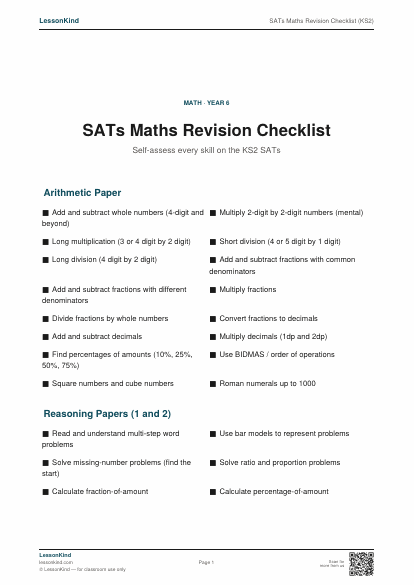
Printable, classroom-ready resources for the topics in this article.
Going deeper
On giftedness, identity and motivation
Books we'd recommend on the topics raised in this article.
For teachers and parents
-
M
Mindset: Changing The Way You Think To Fulfil Your Potential — Carol S. Dweck
On the dangers of fixed-ability labels - G Grit: The Power of Passion and Perseverance — Angela Duckworth
- R Raising Kids Who Read: What Parents and Teachers Can Do — Daniel T. Willingham
-
P
Psychosynthesis Counselling in Action — Diana Whitmore
On supporting children's whole-person development
Convenience links to Amazon. As an Amazon Associate we earn from qualifying purchases at no extra cost to you. Read our affiliate disclosure.
Keep reading
First-year teaching
Your First Parents' Evening (And How Not to Dread It)
Parents' evening can feel like 30 high-stakes interviews with strangers. Here's the structure that works, and the phrases that get you out of awkward moments gracefully.
5 min read
Teaching strategy
The Quiet Power of Low-Stakes Quizzing
Frequent low-stakes quizzes might be the single highest-impact, lowest-effort change you can make to your teaching this year.
6 min read