Teaching strategy · 6 min read
The Quiet Power of Low-Stakes Quizzing
Why testing little and often is the best-kept secret in elementary teaching
Published 2026-05-21
In some teacher circles, the word "test" is taboo. Tests, the argument goes, are stressful. They label children. They reduce learning to ticking boxes.
That's a fair description of HIGH-STAKES tests — the ones with reports cards, parent meetings and a percentage attached. But there's a different kind of test that has, in study after study, turned out to be one of the most effective tools we have for teaching elementary children. It's called LOW-STAKES QUIZZING. And it might be the best-kept secret in primary education.
What the research found
When researchers compare students who restudy material against students who QUIZ THEMSELVES on it, the quizzers consistently come out ahead — sometimes dramatically so. A famous 2008 study by Roediger and Karpicke had three groups all study the same material. One group restudied it three more times. Another group restudied it once and quizzed themselves once. The third group quizzed themselves three times.
A week later, the third group — the most-quizzed — outperformed the most-restudied group by around 50%. Same time invested. Wildly different result.
The phenomenon is called the TESTING EFFECT, or sometimes RETRIEVAL PRACTICE. The act of pulling information out of your brain — even unsuccessfully — strengthens your memory of it more than putting information in.
Why this matters for elementary teachers
Most teachers know the frustration of "we covered this last term — why don't they remember it?" The answer is usually: they encountered the material once, were tested on it once, and never had reason to retrieve it again. Of course they forgot.
Low-stakes quizzing fixes this. Five questions at the start of a lesson. Three on the way out the door. A weekly five-minute "what did we learn this term?" challenge. None of it counted, none of it stressful, all of it powerful.
How to do it well
**Don't grade it.** The whole point is low-stakes. The moment children think this counts, the stress floods in and the learning effect drops. Tell them this is for THEIR brains.
**Mix old with new.** A great quiz has 1 question on today's lesson, 2 on last week's, 1 on last month's, 1 on last term's. This is called "interleaving" — and it's what builds long-term memory.
**Make it quick.** Five questions, five minutes max. If it takes longer, fewer children will do their best.
**Vary the format.** Multiple choice, fill-in-the-blank, "explain to your partner", "draw it", "give an example". Different formats activate different memory pathways.
**Self-mark, in a different colored pen.** Children see their own mistakes, in real time, with no shame attached. This is the moment learning happens.
**Repeat.** Once a week minimum. Twice is better. Daily exit-ticket quizzes can be done in 90 seconds.
What to drop to make room
Restudy. Re-reading notes. Highlighting. Copying out definitions. All of these feel productive but barely move the dial on long-term retention. Replace them with retrieval — quizzes, "tell your partner," brain-dump exercises — and the same time investment will produce dramatically better results.
It's free. It's fast. It's based on years of solid research. And almost no school is doing it as much as the evidence says they should.
Practical resources for this
Take this further
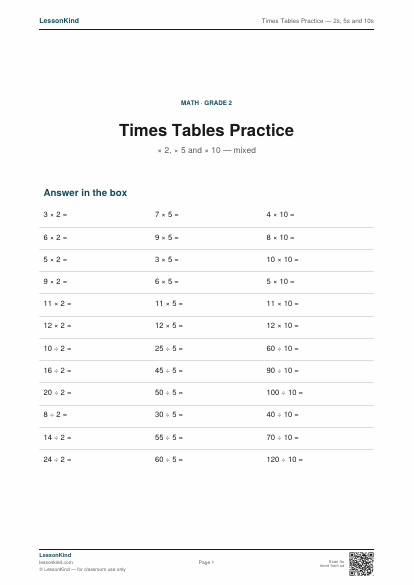
Printable, classroom-ready resources for the topics in this article.
Going deeper
Books on retrieval practice and memory
Books we'd recommend on the topics raised in this article.
Foundational
Convenience links to Amazon. As an Amazon Associate we earn from qualifying purchases at no extra cost to you. Read our affiliate disclosure.
Keep reading
Assessment & feedback
How to Give Feedback That Actually Changes the Work
Most marking has almost no effect on student work. Here's what does — and what to stop doing immediately.
7 min read
Assessment & feedback
Feedback That Changes the Work
Decades of research on feedback in education converge on one uncomfortable finding: most feedback given in classrooms produces little or no improvement. Here's what actually works.
7 min read
Teaching strategy
The Myth of Learning Styles — and What to Do Instead
Learning-styles theory has been one of the most popular ideas in education and one of the most thoroughly debunked. Here's why — and what genuinely helps children learn.
7 min read