Reading & literacy · 8 min read
Phonics vs Whole Language: The Fight Is (Mostly) Over
What the research actually says about how children learn to read
Published 2026-04-16
For half a century, two camps fought a quiet, bitter war over how children should be taught to read.
On one side: phonics-first advocates, who argued that children must first be taught to map letters to sounds explicitly and systematically. On the other: whole-language proponents, who believed that reading is acquired naturally if children are surrounded by good books and meaningful texts.
The research is now clearer than it has ever been. And it doesn't fully vindicate either camp — but it leans hard in one direction.
What we now know
A series of large reviews — the U.S. National Reading Panel (2000), the Rose Review in the UK (2006), and the more recent Australian Reading Hub work — converged on the same finding: the most effective approach is **systematic, synthetic phonics** combined with **rich, varied exposure to texts**.
In other words, BOTH camps had something right. But the part the phonics camp had right was the more fundamental: without explicit, systematic teaching of letter-sound relationships, a meaningful proportion of children — particularly those without strong literacy support at home — never crack the code. They stall, they coast on memorization and picture cues, and the gap widens.
What "systematic synthetic phonics" actually means
Children are taught letter-sound correspondences in a planned, cumulative order. Sounds are introduced one at a time. Children are taught to BLEND sounds together to read words, and SEGMENT words into sounds to spell them. They practice reading "decodable" texts that use only the sounds they've been taught so far, then move on to richer texts as their bank of sounds grows.
This is not about killing the joy of reading. It's about giving every child the keys to the castle so they can enjoy the books inside.
What rich exposure adds
Phonics gets children into reading. It does not, by itself, create lifelong readers. The children who flourish in middle school and beyond are those who have ALSO been read to from an early age, surrounded by books, asked questions about what they've read, and treated as members of a reading community.
This means: read aloud every day, even with older children. Pick books that are slightly above what they could read independently. Talk about characters. Argue about endings. Build a culture in which reading is something people who are interesting do.
What this means for your classroom
If you're teaching Pre-K to Grade 2, your job is largely phonics. Daily, systematic, explicit, with chances to apply the skill in connected text. Every child should be assessed regularly so you know which sounds they have and which they don't.
If you're teaching Grade 3 and up, the focus shifts: most of your children can decode, but many will need help reading FLUENTLY (with appropriate speed and expression) and understanding more complex texts. Vocabulary, background knowledge, and discussion become the engines of growth.
For all of us: read aloud, every day. Books your children couldn't read alone. Books that make them laugh, gasp, and ask "what happens next?". The phonics gives them the door. The reading aloud gives them a reason to walk through it.
A note on the children who struggle
A small percentage of children — usually around 5–10% — will have persistent difficulty even with strong phonics instruction. Many of them will be on the dyslexic spectrum. The right answer is rarely "more of the same"; it's earlier identification, structured one-to-one intervention, and patience. If a child is still struggling after a term of solid Tier 1 phonics, escalate. Don't wait.
Bottom line
Teach phonics, systematically and well. Read aloud, every day, joyfully. The reading wars are mostly over. The children win.
Free bundle for this topic
EYFS Essentials Pack
8 early-literacy essentials — provision, phonics-readiness, mark-making and storytime support.
Practical resources for this
Take this further
Printable, classroom-ready resources for the topics in this article.
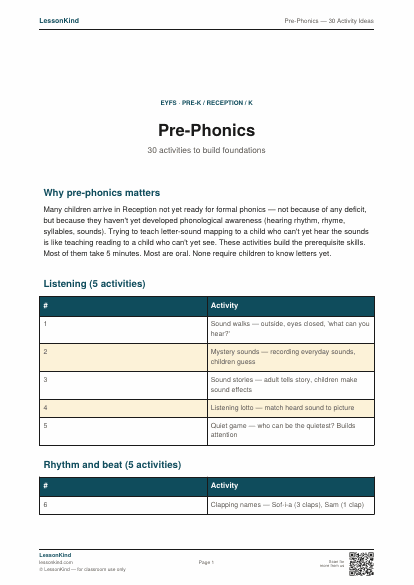
Pre-Phonics — 30 Activity Ideas
30 activities to develop the foundations BEFORE introducing letters — listening, rhythm, rhyme, alliteration, oral blending. The skills that determine how well phonics will land later.
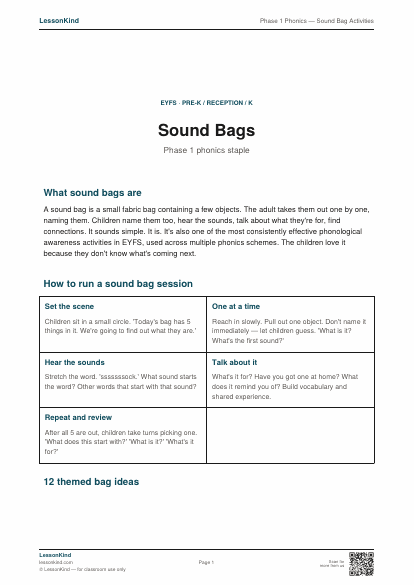
Phase 1 Phonics — Sound Bag Activities
How to set up and use sound bags — a Phase 1 phonics staple. With 12 themed bag ideas and how to scaffold across the year.
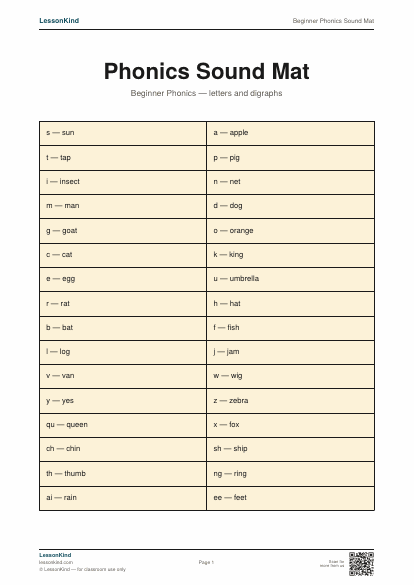
Beginner Phonics Sound Mat
All 26 single letters plus the most common digraphs. Stick on desks for independent writing support.
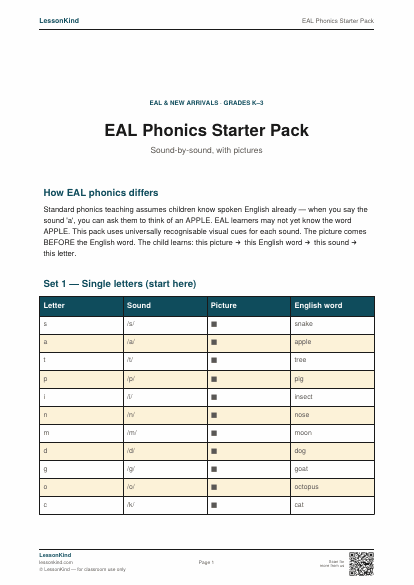
EAL Phonics Starter Pack
Adapted phonics introduction for EAL learners — pictures and visual cues for every sound, no English vocabulary assumed.
Going deeper
Books on the science of teaching reading
If you're new to the evidence on reading instruction, these are the texts that have shaped current practice.
Foundational
-
T
The Art and Science of Teaching Primary Reading — Christopher Such
The clearest UK summary of the evidence base - T The Reading Mind: A Cognitive Approach to Understanding How the Mind Reads — Daniel Willingham
-
L
Language at the Speed of Sight — Mark Seidenberg
Why reading is hard and why phonics matters
Practical implementation
Convenience links to Amazon. As an Amazon Associate we earn from qualifying purchases at no extra cost to you. Read our affiliate disclosure.
Keep reading
Reading & literacy
Phonics Screening: A Parent's Honest Guide
Every June, parents of UK Year 1 children worry about a 40-word test their child has to take. Here's what it's actually measuring, what the result means, and what to do about it — including the bit most schools don't tell you.
8 min read
Reading & literacy
When to Worry About a Five-Year-Old Who's Not Reading Yet
Reception and Year 1 parents worry constantly about their child's reading. Most of the worry isn't warranted. Some of it is. Here's how to tell the difference — and what to do about both.
8 min read
Reading & literacy
What 'Reading Level' Actually Means in Year 2
If your child has come home with a book labelled 'orange band' or 'lime' or 'level 9,' you've probably wondered what it actually means. The honest answer is messier than schools tend to admit.
7 min read