Parent communication · 5 min read
PSHE at Primary School: What Is It and What Do Children Learn?
A parent's guide to Personal, Social, Health and Economic education
Published 2026-05-19
PSHE stands for Personal, Social, Health and Economic education. It covers the knowledge, skills, and values that help children navigate their own lives and contribute to the world around them. In primary school it spans: health and wellbeing, relationships, and living in the wider world.
What do children learn?
**In health and wellbeing**, children learn about: physical health and fitness; healthy eating; emotional health and mental wellbeing; keeping safe (including online safety and basic first aid); growing and changing; and making good choices about health.
**In relationships**, children learn about: what makes a healthy friendship; families and household structures; caring relationships; respecting differences; resolving conflict; and — in upper KS2 — consent and relationships in a broader sense.
**In living in the wider world**, children learn about: different jobs and careers; managing money; and rights and responsibilities as citizens.
Is PSHE statutory?
Relationships Education (which sits within PSHE) became statutory in 2020. Schools must now teach it to all primary pupils. The full PSHE programme is strongly recommended but not currently statutory — though the DfE consultation in 2023 proposed making it so.
What about sensitive topics?
Some aspects of PSHE — particularly around health, relationships, and growing up — are taught sensitively and appropriately for age. Good schools share curriculum content with parents before teaching it. If you have questions about what your child will be taught, your school's PSHE lead will be happy to share the curriculum and approach.
How to support PSHE at home
PSHE is one of the subjects where home matters most — because the content is directly about the lives children lead outside school. A few practical ways to support it:
Talk about feelings. Name emotions in your household. When something goes wrong, talk about how it felt and what helped. This normalises emotional vocabulary.
Discuss the news and world events at an age-appropriate level. PSHE includes citizenship and the wider world — children who know what's going on around them engage more deeply with these topics.
Model the values you want your child to develop. PSHE teaches empathy, respect, and responsibility — but children learn these primarily from watching the adults around them.
Practical resources for this
Take this further
Printable, classroom-ready resources for the topics in this article.
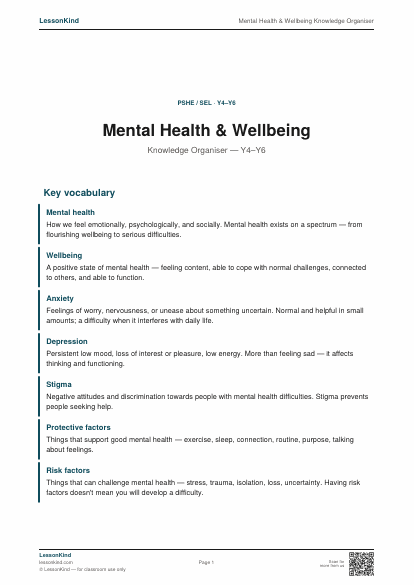
Mental Health & Wellbeing Knowledge Organiser
A KS2 knowledge organiser on mental health — the spectrum from wellbeing to mental health difficulties, factors that support good mental health, warning signs, stigma, and where to get help.
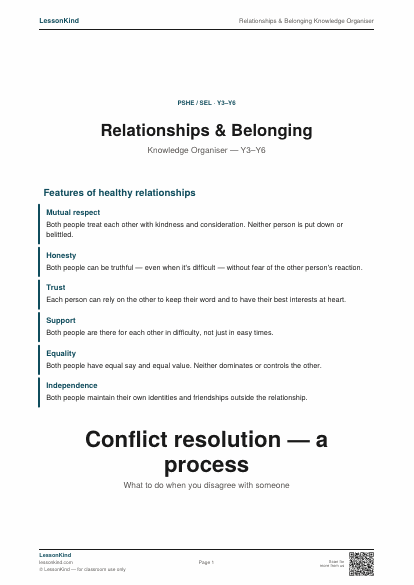
Relationships & Belonging Knowledge Organiser
A KS2 knowledge organiser on healthy relationships — features of healthy and unhealthy friendships, conflict resolution, empathy, active listening, and the importance of belonging.
Going deeper
PSHE and wellbeing books for parents
Books we'd recommend on the topics raised in this article.
For parents of primary children
Convenience links to Amazon. As an Amazon Associate we earn from qualifying purchases at no extra cost to you. Read our affiliate disclosure.
Keep reading
Parent communication
What Is EYFS? A Guide for New Parents
EYFS stands for Early Years Foundation Stage. It covers children from birth to the end of Reception. This guide explains what it is, what your child will experience, and how progress is measured.
6 min read
Parent communication
Understanding Your Child's Primary School Report
Primary school reports can be confusing — different schools use different formats, grades, and language. This guide explains what to look for and how to have a useful conversation with your child's teacher.
5 min read