Reading & literacy · 7 min read
Why writing is genuinely harder than reading (and what to do about it)
Reading is recognition. Writing is generation. They use different cognitive systems.
Published 2026-11-28
A lot of primary teachers have noticed this pattern: a child reads beautifully, then sits down to write and produces three flat sentences. The handwriting is neat. The spelling is fine. But the writing is small, dull, and far below what their reading would predict.
The instinct is to wonder if they're being lazy. They're not. Reading and writing tax fundamentally different cognitive systems — and writing is the harder one, by a long way.
Reading is recognition. Writing is generation.
When a child reads a sentence, the cognitive demand is recognition. The words are there on the page. The grammar is already structured. The meaning is already encoded. The brain's job is to decode the marks, retrieve the meanings, and assemble them. It's hard work, but it's PATTERN RECOGNITION work — finding what's there.
When a child writes a sentence, the cognitive demand is generation. The words have to be conjured from memory. The grammar has to be assembled. The meaning has to be encoded into structures the writer chooses. Every comma, every word choice, every clause boundary is a generative decision.
This is why a child can read 'incredibly' in a chapter book at age 7 but won't use it in their own writing until age 9 or 10 — and might never use 'subsequently' even though they can recognise it on a page.
A useful mental model: reading is multiple-choice with the answers in front of you. Writing is short-answer with no question bank. Same words, same grammar, vastly different cognitive load.
Why working memory matters so much in writing
When a child writes, they have to hold a lot of things in working memory simultaneously:
- What they want to say (the idea) - The sentence-shape they're building - The next word they want - The spelling of that word - Whether to put a comma here - The handwriting motor pattern of each letter - The previous sentence (so the next one connects) - What's coming next
This is enormous. For an experienced writer (you, probably), most of these are automatic. Spelling is fluent. Handwriting is fluent. Sentence-grammar is fluent. So your working memory is freed up for the IDEA — what to say.
For a child writer, almost none of this is automatic. Spelling takes attention. Handwriting takes attention. Whether to use 'a' or 'the' takes attention. So when they get to the IDEA — the actual content — they have almost no working memory left. The writing comes out short, flat, and structurally simple, because that's all they had cognitive room for.
This is why the writing of a child who can READ a complex sentence is often dramatically less complex than what they read. They CAN process complex sentences. They just can't generate them, because generation costs more.
What this means for teaching
A few practical implications.
**Automate the basics first.** If a child is still effortfully spelling common words, no amount of 'use more interesting vocabulary' will help. The working memory is full. The fix is to make spelling automatic — through frequent low-stakes practice on common words — so the brain has room for higher-level thinking.
The same with handwriting. A child whose handwriting is laboured cannot focus on word choice. Insist on fluent, comfortable handwriting (and where it's not happening, address the handwriting separately). This isn't pedantic — it's a working-memory issue.
**Reduce cognitive load when teaching new skills.** When you're teaching a new sentence type — say, complex sentences with subordinate clauses — don't also expect new vocabulary, perfect punctuation and original ideas all at once. Let the child reuse familiar content while practising the new structure. They can't do everything at once.
**Plan, then write.** Most adult writers don't generate prose and ideas simultaneously. They plan first — bullet points, mind maps, story structures. Then they write. This separates idea-generation from sentence-generation. Children should learn this early. The 'just write whatever comes into your head' approach overloads them.
**Write small, write often.** A daily 5-minute write produces more growth than a once-a-week 45-minute write. Why? Because writing fluency builds the way reading fluency builds — through frequent, low-stakes practice. The 45-minute lesson with cold ideas is anxiety-inducing and produces little fluency.
What about modelling?
Modelling — the teacher writing live in front of the class — is one of the most evidenced-effective writing strategies. Why? Because it shows children the GENERATIVE process they're trying to learn.
When you read out a finished piece, children see the destination. They have no idea how to get there. When you write live, thinking aloud — 'okay, I want to start with a hook… how about a question? "What would you do if…" no, that's a bit weak. Let me try a description instead. "The forest was quiet — too quiet." Yeah, that's better.' — children see the iteration, the doubt, the revising. They see that sentences don't arrive perfect.
Modelling is hard. You have to be willing to show your working, including the rubbish first attempts. But it does more than handing children a finished example.
The reading-writing relationship
Reading and writing reinforce each other, but unevenly. Strong reading produces some growth in writing — children pick up structures and vocabulary they wouldn't otherwise meet. But strong writing requires explicit teaching of the GENERATIVE process, which reading alone doesn't give them.
So the formula is something like: read widely (input), AND write often, AND get explicit teaching of writing strategies. Just reading widely doesn't make a strong writer, despite what folk wisdom suggests. The link from reading to writing is real but partial.
The reverse is more reliable: you can't really write well if you don't read widely, because you don't have the structures to draw from. So reading is necessary but not sufficient.
What to say to a frustrated child
A child whose reading outstrips their writing is often frustrated by it. They can hold a complex sentence in their head; they can't get it onto the page.
The most helpful thing you can say is: 'Writing is harder than reading. Your brain is doing a lot of work right now, even when it doesn't show on the page. The way to get better is to write a little bit every day. You'll find more and more of it becomes automatic, and the words will start to come faster.'
Children find this enormously reassuring. They've been carrying around a vague worry that they're worse at writing than they should be, given how well they read. The honest explanation — that reading and writing tax different things, and writing is genuinely harder — gives them permission to be patient with themselves.
That patience is what turns a frustrated reader into a developing writer.
Free bundle for this topic
EYFS Essentials Pack
8 early-literacy essentials — provision, phonics-readiness, mark-making and storytime support.
Practical resources for this
Take this further
Printable, classroom-ready resources for the topics in this article.
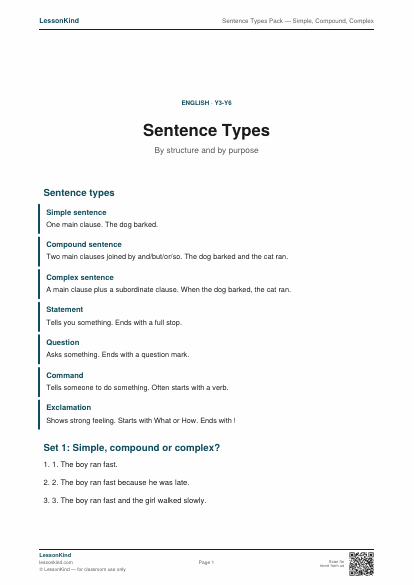
Sentence Types Pack — Simple, Compound, Complex
Sentence-types practice covering simple, compound and complex sentences plus the four sentence purposes (statement, question, command, exclamation). Upper KS2 focused.
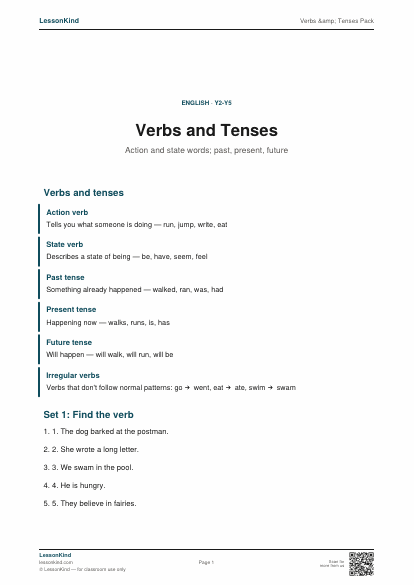
Verbs & Tenses Pack
Ready-made verbs worksheet covering action verbs, state verbs, and the three main tenses (past, present, future). KS2 focused.
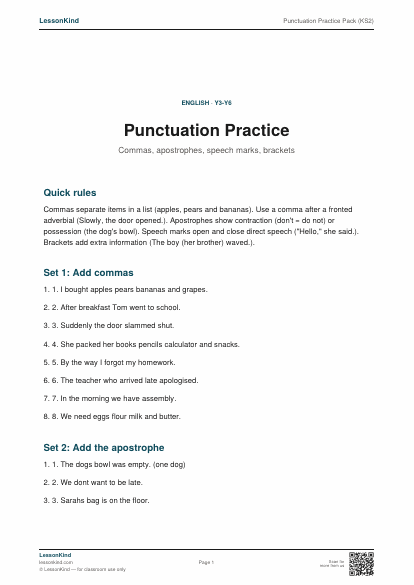
Punctuation Practice Pack (KS2)
KS2 punctuation pack — commas in lists, commas after fronted adverbials, apostrophes, speech marks, and brackets. Ready-made for Y3-Y6.
Going deeper
On the cognitive load of writing
Books we'd recommend on the topics raised in this article.
Writing pedagogy and cognitive load
- T Teachers vs Tech?: The case for an ed tech revolution — Daisy Christodoulou
- W Writing for Pleasure: Theory, research and practice — Ross Young, Felicity Ferguson
- T The Write Stuff: Transforming the Teaching of Writing — Jane Considine
- T Talk for Writing in the Early Years — Pie Corbett, Julia Strong
Convenience links to Amazon. As an Amazon Associate we earn from qualifying purchases at no extra cost to you. Read our affiliate disclosure.
Keep reading
Reading & literacy
The Vocabulary Gap (And How to Close It)
Vocabulary size at age 5 is one of the strongest predictors of academic outcome at 16. Here's why the gap exists, and what teachers can do to close it.
6 min read
Reading & literacy
Spelling Isn't Just Memorisation
Most schools still run weekly spelling tests where children get 10/10 on Friday and misspell the same words on Monday. Here's why memorisation isn't the answer.
5 min read