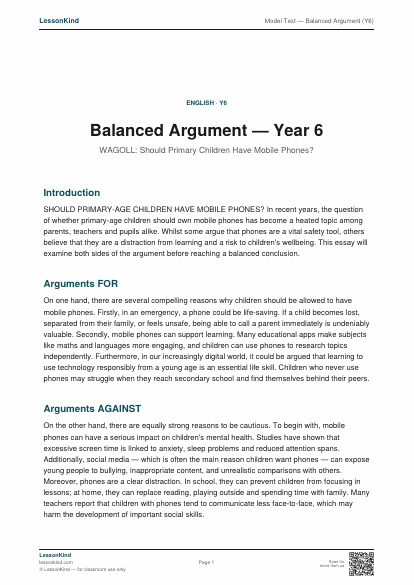
Model Text — Balanced Argument (Y6)
WAGOLL example of a Year 6 balanced argument essay — Should Children Have Mobile Phones? Demonstrates formal essay structure, both-sides reasoning, modal verbs, and a measured conclusion at SATs writing standard.
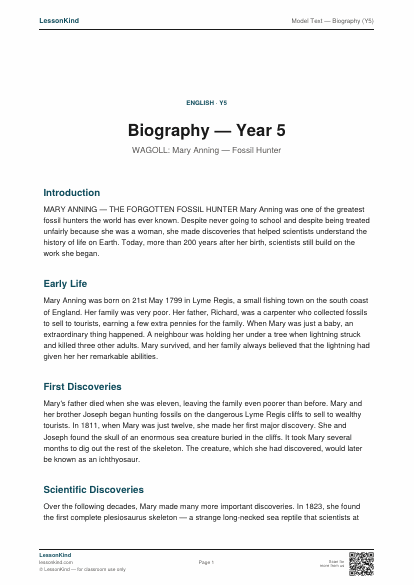
Model Text — Biography (Y5)
WAGOLL example of a Year 5 biography of Mary Anning, fossil hunter. Cross-curricular link to KS2 science (rocks and fossils). Demonstrates third-person past-tense biography structure with chronological organisation.
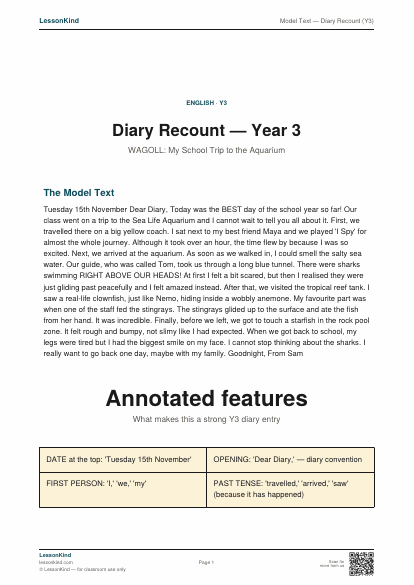
Model Text — Diary Recount (Y3)
WAGOLL example of a Year 3 diary entry recounting a school trip. Demonstrates first-person past-tense recount, time connectives, and emotional response — common Y3 writing genre.
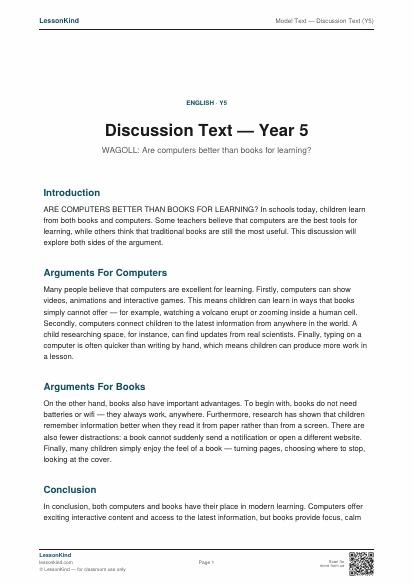
Model Text — Discussion Text (Y5)
WAGOLL example of a Year 5 discussion text — Are Computers Better Than Books for Learning? Demonstrates balanced both-sides structure, formal connectives, and a measured conclusion below the harder Y6 standard.
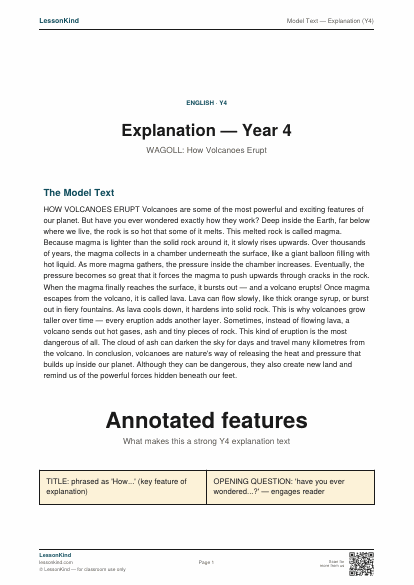
Model Text — Explanation (Y4)
WAGOLL example of a Year 4 explanation text — How Volcanoes Erupt. Demonstrates cause-and-effect language, technical vocabulary, present tense for general truths, and clear paragraph structure.
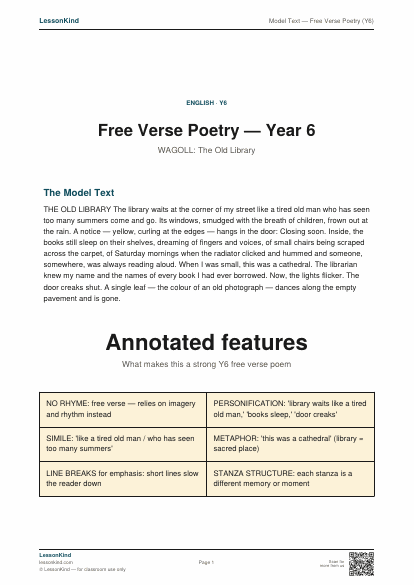
Model Text — Free Verse Poetry (Y6)
WAGOLL example of Year 6 free verse poetry — The Old Library. Demonstrates imagery, metaphor, line breaks, and emotional weight without rhyme. Useful for SATs reading and for poetry units.
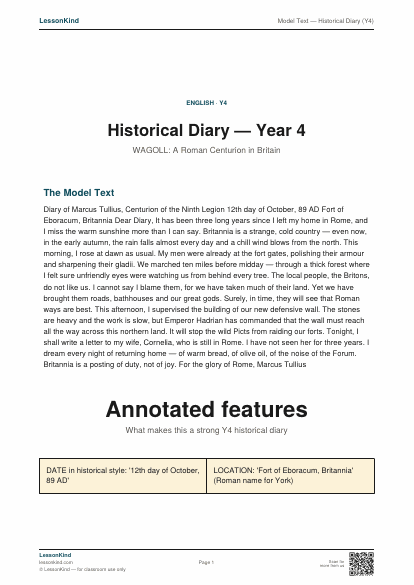
Model Text — Historical Diary (Y4)
WAGOLL example of a Year 4 historical diary — A Roman Centurion in Britain. Cross-curricular link to Romans history unit. Demonstrates first-person past-tense recount with historical detail and authentic voice.
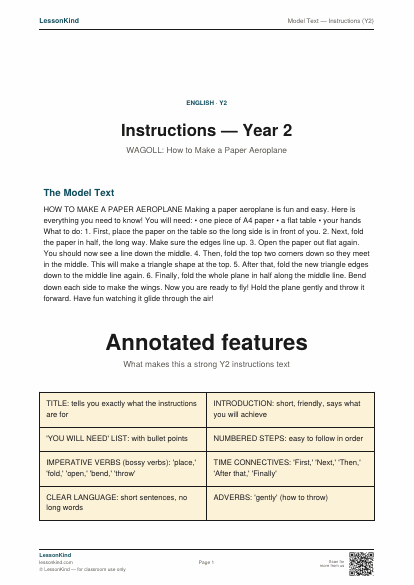
Model Text — Instructions (Y2)
WAGOLL example of a Year 2 instructions text — How to Make a Paper Aeroplane. Demonstrates imperative verbs, time-order connectives, numbered steps, and clear language for KS1 instructional writing.
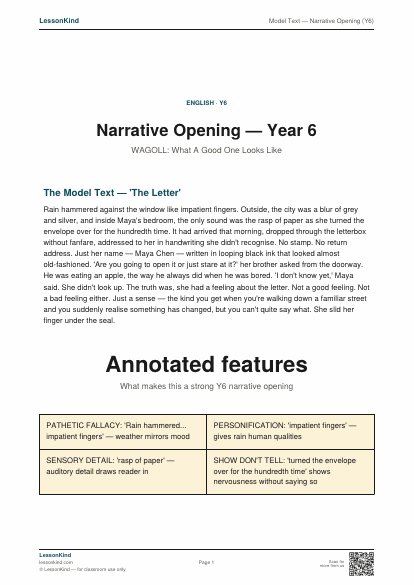
Model Text — Narrative Opening (Y6)
WAGOLL example of a Year 6 narrative opening — atmospheric, character-driven, with sophisticated sentence variety. Demonstrates show-don't-tell, dialogue, and 'pathetic fallacy' for SATs writing standards.
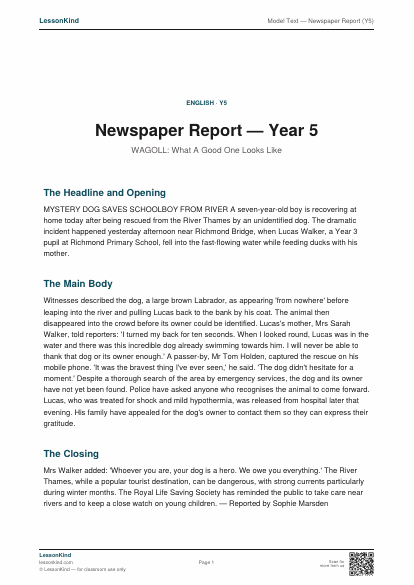
Model Text — Newspaper Report (Y5)
WAGOLL example of a Year 5 newspaper report on a fictional event. Demonstrates the inverted-pyramid structure, direct/reported speech, formal third-person voice, and journalistic conventions.
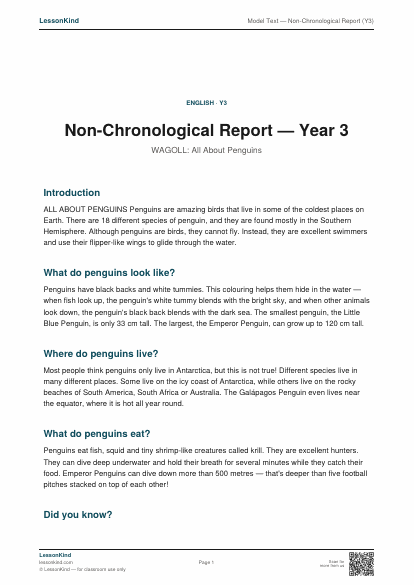
Model Text — Non-Chronological Report (Y3)
WAGOLL example of a Year 3 non-chronological report on penguins. Demonstrates clear sub-headings, factual present tense, technical vocabulary, and information organisation appropriate for Year 3.
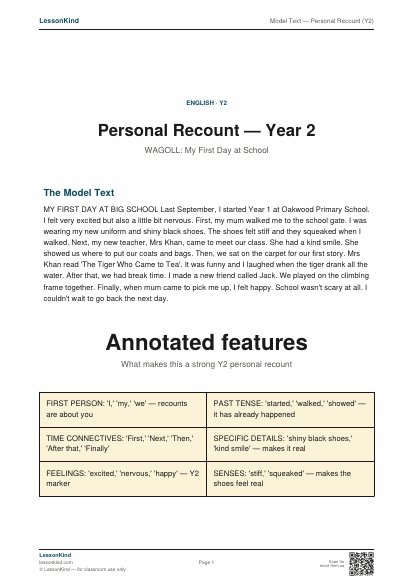
Model Text — Personal Recount (Y2)
WAGOLL example of a Year 2 personal recount — My First Day at School. Demonstrates first-person past-tense recount, simple time connectives, and feeling words for KS1.
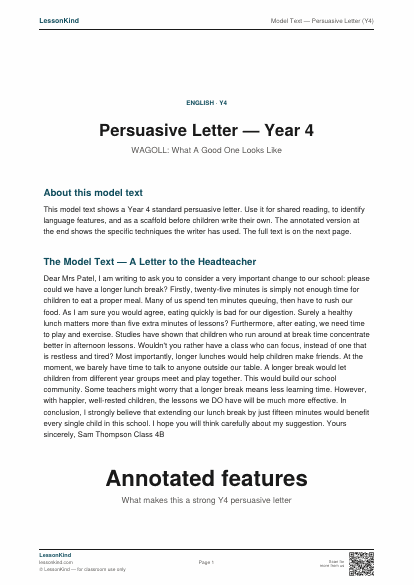
Model Text — Persuasive Letter (Y4)
WAGOLL example of a Year 4 persuasive letter. Includes the model text, an annotated version highlighting language features, vocabulary list, and writing prompt. Perfect for shared reading and writing scaffolds.
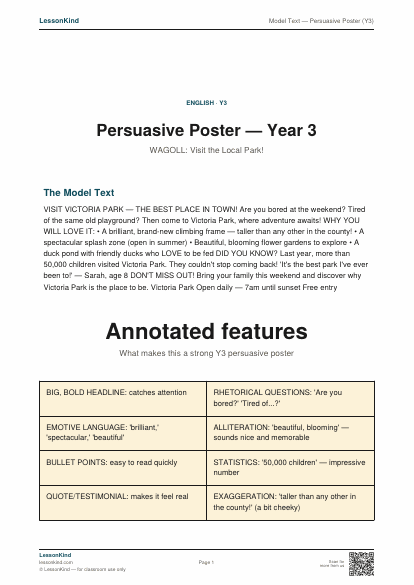
Model Text — Persuasive Poster (Y3)
WAGOLL example of a Year 3 persuasive poster — Visit the Local Park! Demonstrates rhetorical questions, emotive language, alliteration, and visual conventions of persuasive posters for younger writers.
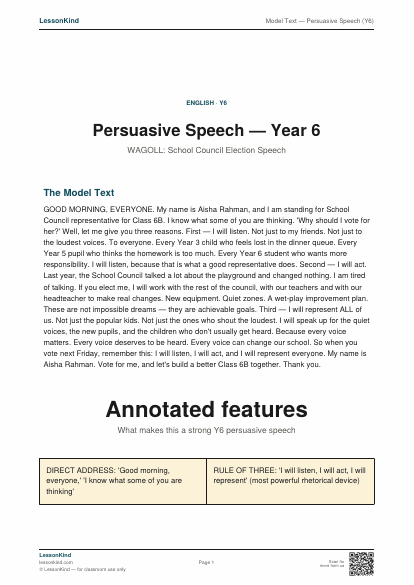
Model Text — Persuasive Speech (Y6)
WAGOLL example of a Year 6 persuasive speech — for school council election. Demonstrates direct address, rhetorical devices (rule of three, repetition, rhetorical questions), and pace control for spoken delivery at SATs writing standard.
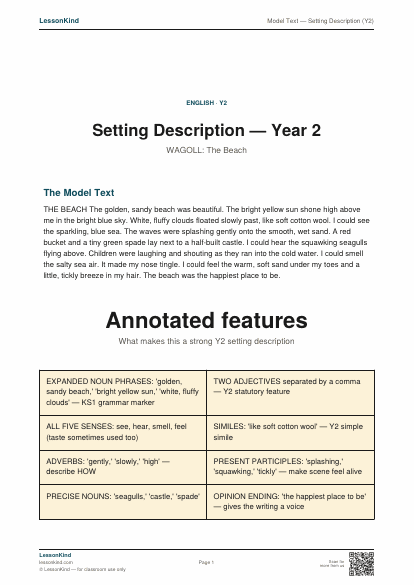
Model Text — Setting Description (Y2)
WAGOLL example of a Year 2 setting description — The Beach. Demonstrates expanded noun phrases, the five senses, and adjectives for descriptive writing in KS1.
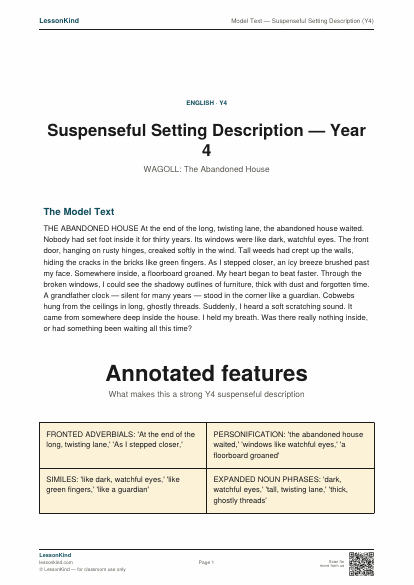
Model Text — Suspenseful Setting Description (Y4)
WAGOLL example of a Year 4 suspenseful setting description — The Abandoned House. Demonstrates atmospheric language, varied sentence openers, and personification for building tension.
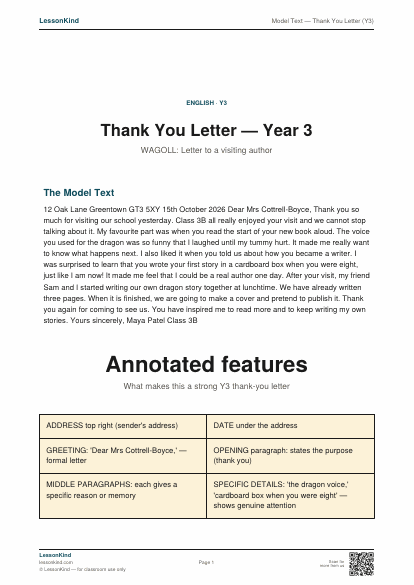
Model Text — Thank You Letter (Y3)
WAGOLL example of a Year 3 thank-you letter to a visiting author. Demonstrates letter conventions, paragraphing, and specific details that show genuine engagement.