English / Language Arts
English / Language Arts for 5th
Phonics, sight words, spelling, grammar, reading comprehension and writing prompts.
All resources
English CPD Pack for Class Teachers
Six 20-minute CPD sessions for English Leads to deliver to class teachers — covering reading aloud, comprehension teaching, writing feedback, vocabulary teaching, phonics for non-specialists, and reading-for-pleasure leadership. Designed for twilight INSETs.
English Lead Handover Document
When an English Lead leaves a school, the next person inherits chaos by default. This handover template captures everything — phonics scheme, reading data, library status, CPD history, key children, statutory data trends. Mirrors the music and assessment coordinator handover docs.
English Lead — Professional Reading List
Professional books every primary English Lead should read — the research-grounded titles on phonics, reading-for-pleasure, comprehension, vocabulary, and writing teaching. Honest about which are essential and which are optional.
English Monitoring Walk — Prompt Sheet
What to look for during a 10-minute classroom monitoring walk for English. Specific prompts for reading lessons, writing lessons, phonics lessons, and book corner audits. Designed for English Leads doing learning walks without it feeling like inspection.
Reading for Pleasure — Whole-School Strategy
How English Leads build a school-wide reading culture. Covers the Open University's 4-strand model, library setup, daily read-aloud rituals, reluctant-reader strategies, parent engagement, and how to measure reading-for-pleasure (it's harder than measuring fluency). The most important single thing an English Lead does.
School Library — Setup and Management Guide
How to set up and run a primary school library — book selection, organisation, lending systems, refresh cycles, parent volunteer roles, and the difference between 'a room with books' and 'a library children actually use'. For English Leads inheriting a tired library or starting from scratch.
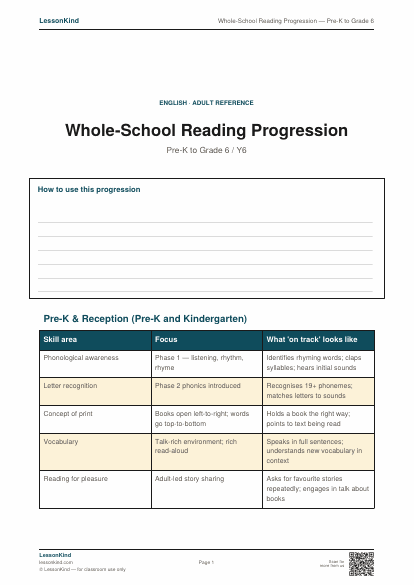
Whole-School Reading Progression — Pre-K to Grade 6
How reading skills develop across primary — phase 1 phonics through KS2 inference, summarisation, and critical reading. Includes year-by-year skill expectations, common misconceptions, and the assessment markers that show whether children are on track. The reference document an English Lead returns to most often.
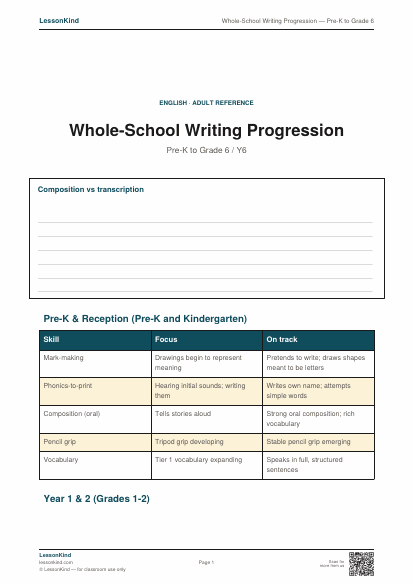
Whole-School Writing Progression — Pre-K to Grade 6
How writing skills develop across primary — emergent mark-making through KS2 sustained writing. Year-by-year skill expectations covering composition, transcription, vocabulary, sentence structure, and editing. Pairs with the reading progression as the English Lead's two foundational reference docs.
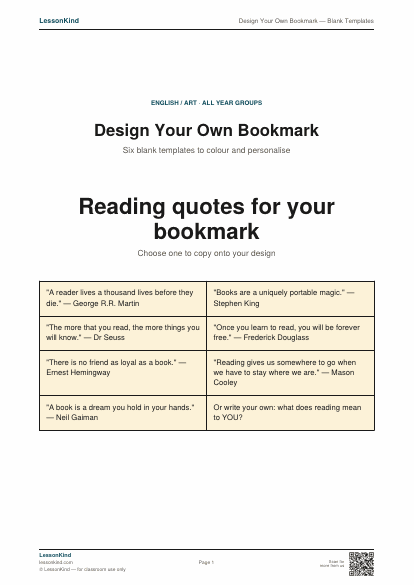
Design Your Own Bookmark — Blank Templates
Six printable blank bookmark templates in different shapes and sizes — for pupils to design, colour, and personalise. Includes motivational reading quote suggestions. Print on card, laminate, and use.
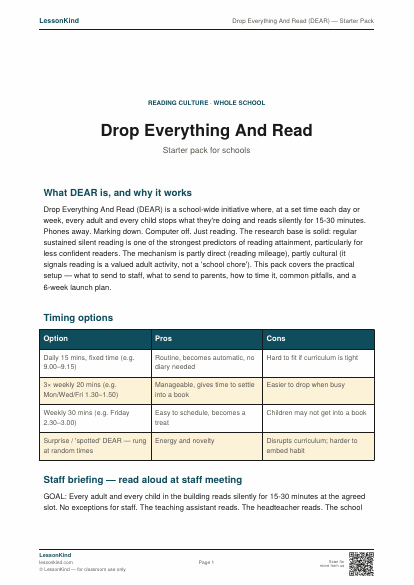
Drop Everything And Read (DEAR) — Starter Pack
Everything to launch a Drop Everything And Read programme — staff briefing, parent letter, signage, slot timing options, evidence base and FAQ. Ready to deploy in week 1.
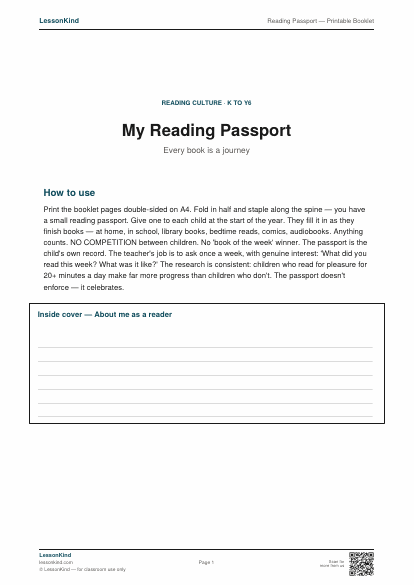
Reading Passport — Printable Booklet
A printable Reading Passport — a fold-and-staple A4 booklet where children record every book read, the country/genre, and a star rating. Builds reading culture without competition or pressure.
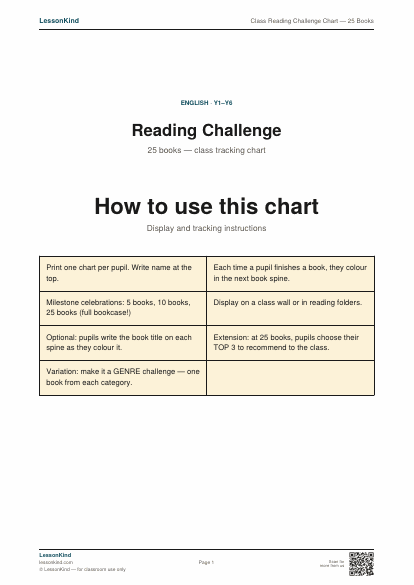
Class Reading Challenge Chart — 25 Books
A printable whole-class reading challenge chart for tracking 25 books per pupil over the year. Includes a pupil name strip and 25 numbered book spines to colour in. Doubles as a classroom display.
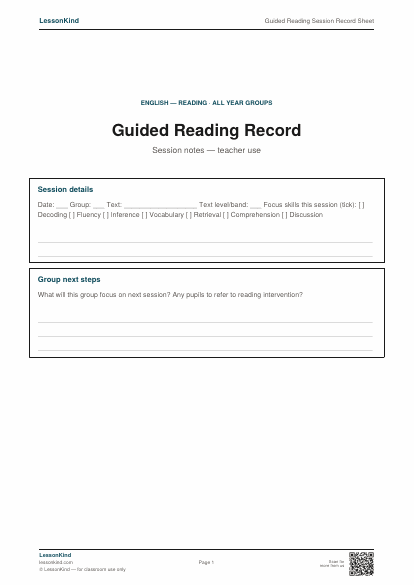
Guided Reading Session Record Sheet
A teacher-facing record sheet for guided reading sessions — group members, text level, focus skills, observations per pupil, and next steps. One sheet per session.
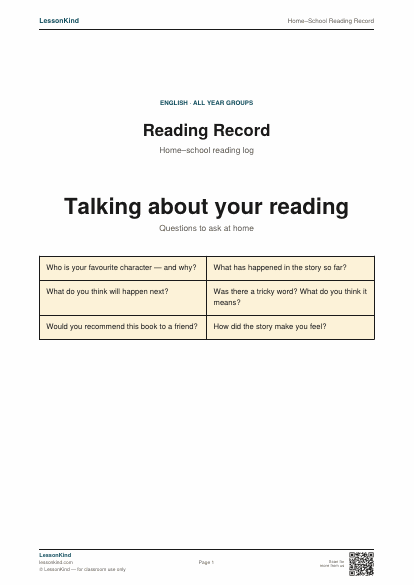
Home–School Reading Record
Printable reading record booklet for primary pupils — weekly log with book title, pages read, date, pupil comment, and parent/carer sign-off. Designed to travel between home and school.
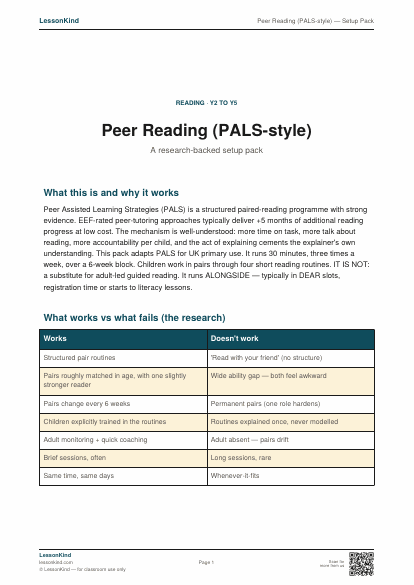
Peer Reading (PALS-style) — Setup Pack
A research-backed peer reading programme adapted from PALS — structured pairs, four reading routines (paired reading, retell, paragraph shrink, prediction), pairing rules, and a 6-week launch plan.
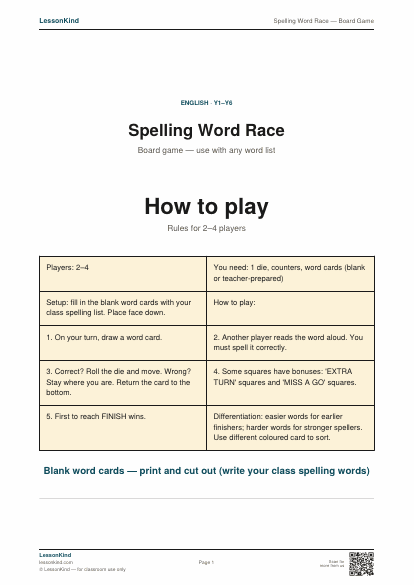
Spelling Word Race — Board Game
A printable board game where players draw a word card and must spell the word correctly to move. Blank word cards included so teachers can insert their own class spelling lists. For 2–4 players.
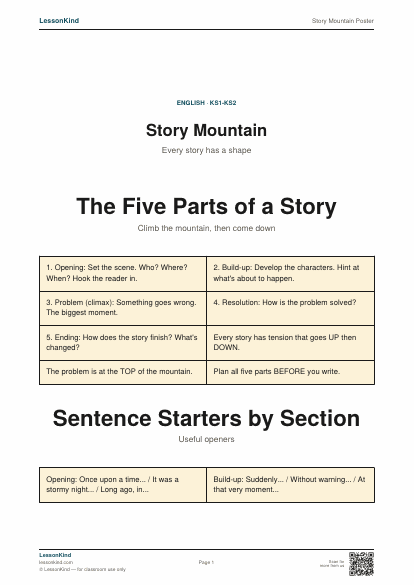
Story Mountain Poster
Visual structure of a story — opening, build-up, problem, resolution, ending. The classic primary writing scaffold.
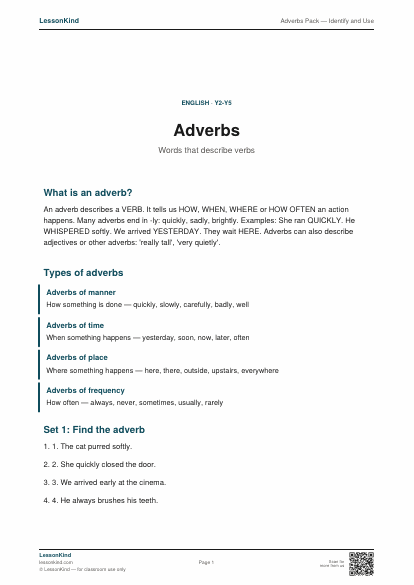
Adverbs Pack — Identify and Use
Ready-made adverbs worksheet covering manner, time, place and frequency adverbs. KS2 focused.
Book Recommendation Display — Pupil Review Template
Printable A5 book recommendation cards for pupils to fill in and display — title, author, star rating, one-sentence summary, who they'd recommend it to. For classroom reading displays.
Books for Reluctant Readers — Curated List
Books specifically chosen to convert reluctant readers — short, accessible, often illustrated, always engaging. For the children who 'don't like reading' (because they haven't found the right book yet). Calibrated for Y2-Y6.
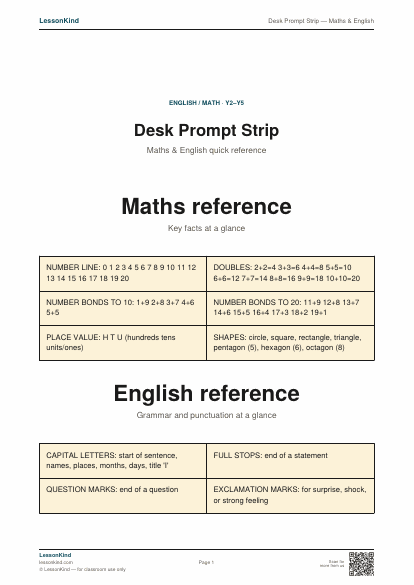
Desk Prompt Strip — Maths & English
A printable A4 desk prompt strip covering key maths and English reference points — number lines to 100, common spellings, punctuation rules, and grammar terms. Laminate for long-term use.
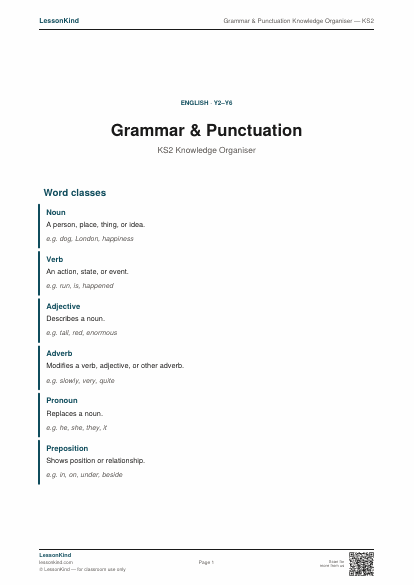
Grammar & Punctuation Knowledge Organiser — KS2
A complete KS2 grammar and punctuation reference — word classes, sentence types, punctuation marks, and key terminology. Covers the SPaG content children need to know from Y2–Y6.
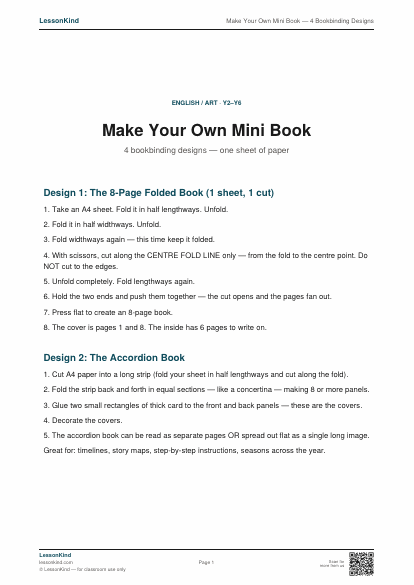
Make Your Own Mini Book — 4 Bookbinding Designs
Instructions for making 4 types of mini book from a single sheet of paper: the 8-page accordion, the 4-page folded book, the concertina, and the pocket staple book. Perfect for writing, topic work, and gifts.
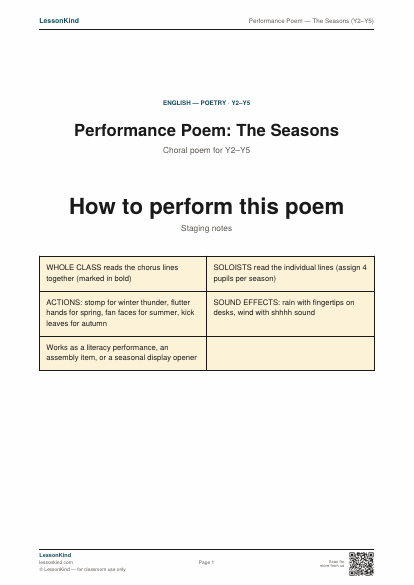
Performance Poem — The Seasons (Y2–Y5)
A four-stanza performance poem about the four seasons — one stanza per season, designed for whole-class choral reading with solos. Includes actions and sound effects guide. Suitable for assemblies and literacy.
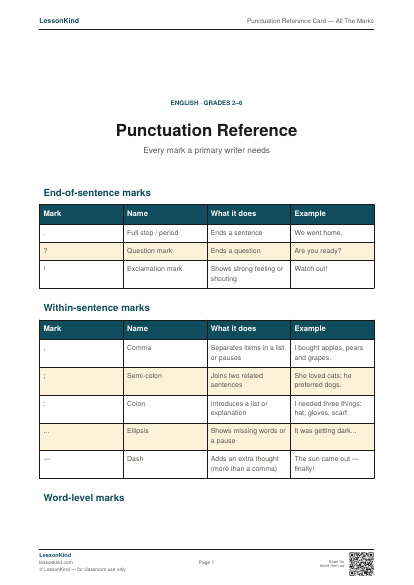
Punctuation Reference Card — All The Marks
Every punctuation mark a primary child needs — what it's called, what it does, and an example. Print, laminate, stick on every desk.
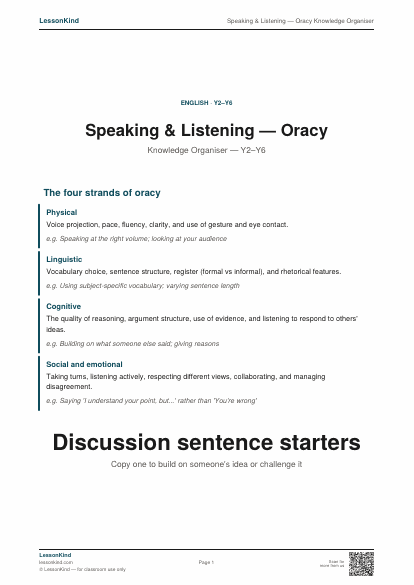
Speaking & Listening — Oracy Knowledge Organiser
A KS2 oracy reference — formal and informal speaking, features of effective talk, listening skills, vocabulary for discussion, and the four strands of oracy (physical, linguistic, cognitive, social/emotional).
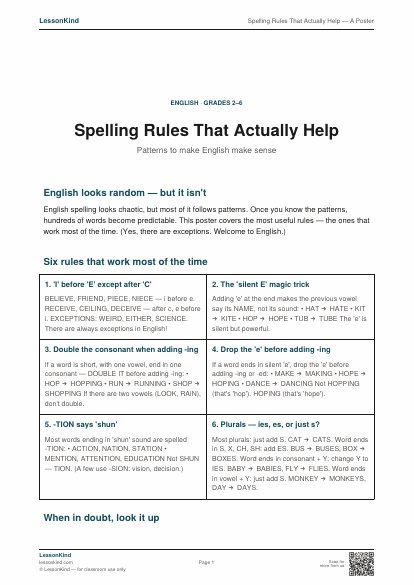
Spelling Rules That Actually Help — A Poster
The spelling rules that make English make sense — i before e, doubling consonants, dropping the e, and the magic of -tion. With clear examples.
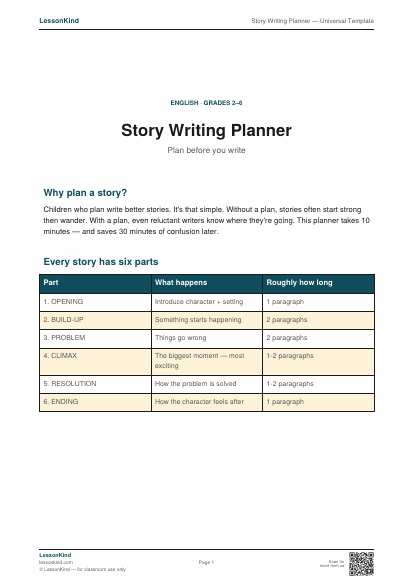
Story Writing Planner — Universal Template
A six-section story planner that works for any narrative — opening, build-up, problem, climax, resolution and ending. Print one per child before any story task.
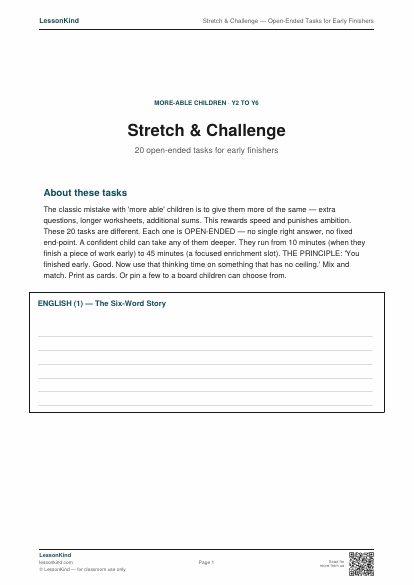
Stretch & Challenge — Open-Ended Tasks for Early Finishers
Twenty open-ended tasks designed for the children who finish first. No 'more of the same' — these are genuinely thinking-required tasks across English, maths, problem-solving and creative writing.
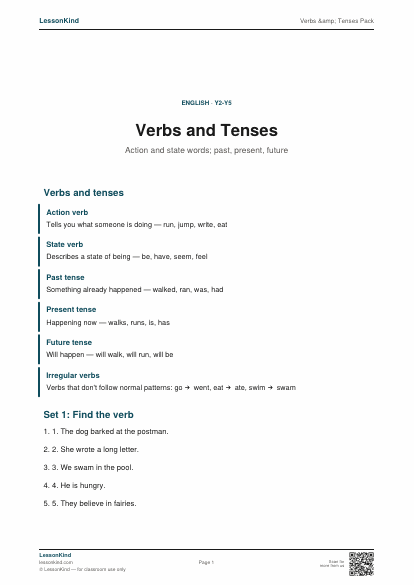
Verbs & Tenses Pack
Ready-made verbs worksheet covering action verbs, state verbs, and the three main tenses (past, present, future). KS2 focused.
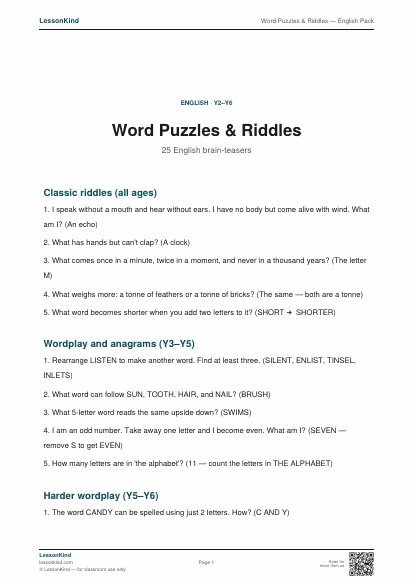
Word Puzzles & Riddles — English Pack
25 word puzzles and riddles for primary — homophones, anagrams, compound words, wordplay, and classic riddles. Great for literacy lessons, wet break, or as starters.
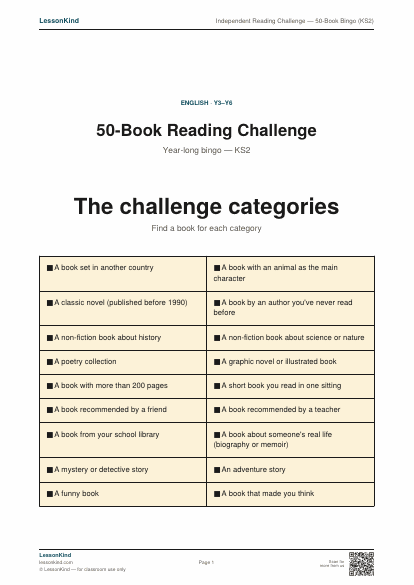
Independent Reading Challenge — 50-Book Bingo (KS2)
A 50-book reading bingo card for KS2 with genre categories — one fiction, one non-fiction, one poetry, one from a different country, one by a new author, and more. A year-long reading challenge.
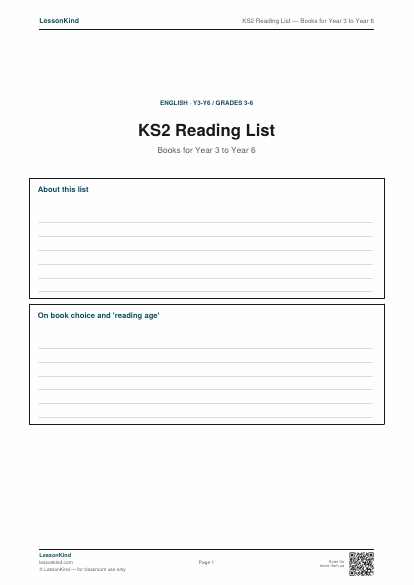
KS2 Reading List — Books for Year 3 to Year 6
Curated reading list for Year 3 through Year 6 — chapter books, mysteries, fantasy, contemporary fiction, graphic novels, and books for children developing their personal reading taste. Calibrated for fluent readers building lifelong reading habits.
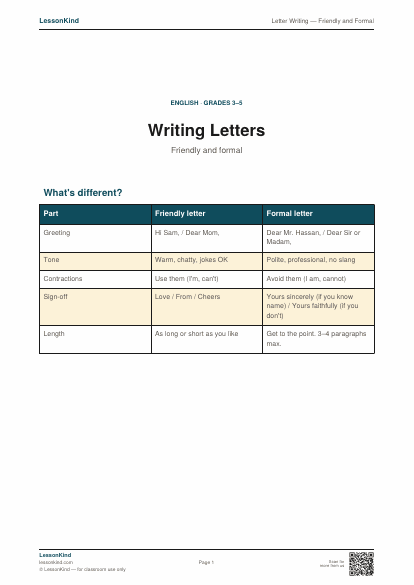
Letter Writing — Friendly and Formal
How to structure friendly and formal letters. Two side-by-side templates with prompts.
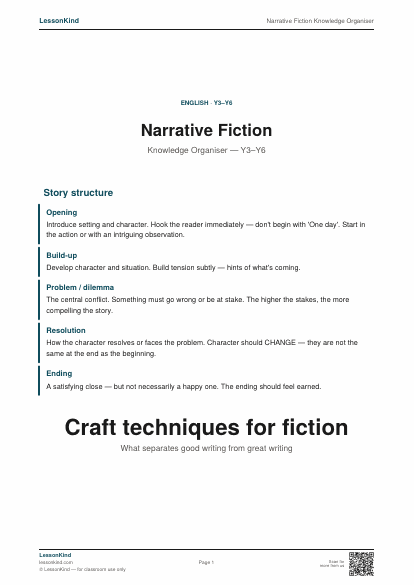
Narrative Fiction Knowledge Organiser
A KS2 knowledge organiser on fiction writing — story structure, character, setting, atmosphere, narrative hooks, and the craft techniques that separate good writing from great writing.
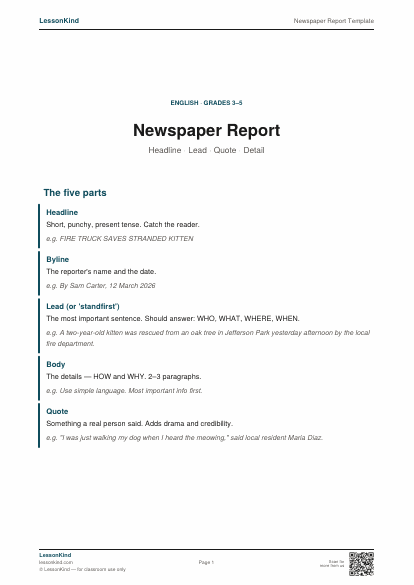
Newspaper Report Template
Plan and write a newspaper report. Headline, byline, lead, body and quote — with prompts for each.
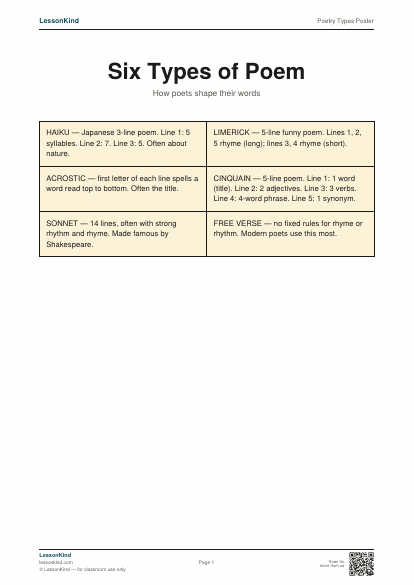
Poetry Types Poster
Six common poetry forms — haiku, limerick, acrostic, cinquain, sonnet, free verse — with one example each.
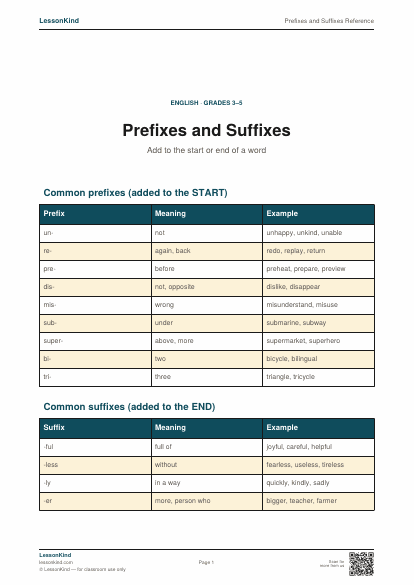
Prefixes and Suffixes Reference
Common prefixes and suffixes with meanings and examples. Helps with spelling and word-meaning detective work.
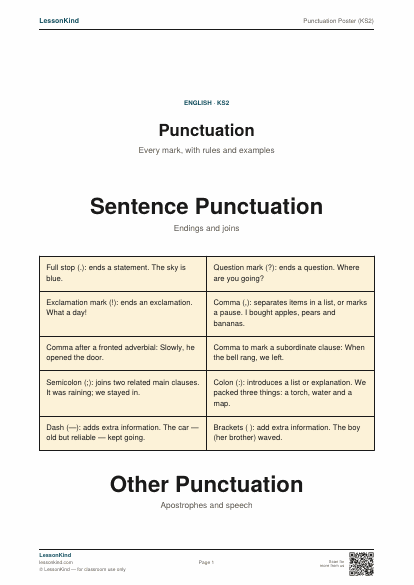
Punctuation Poster (KS2)
Every punctuation mark used in KS2 writing — full stops to semicolons, with examples and rules. Display poster + quick reference.
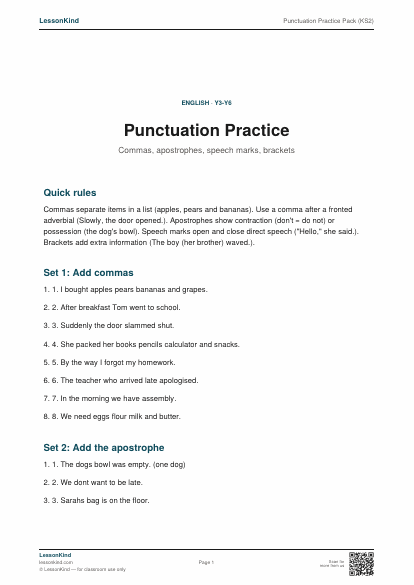
Punctuation Practice Pack (KS2)
KS2 punctuation pack — commas in lists, commas after fronted adverbials, apostrophes, speech marks, and brackets. Ready-made for Y3-Y6.
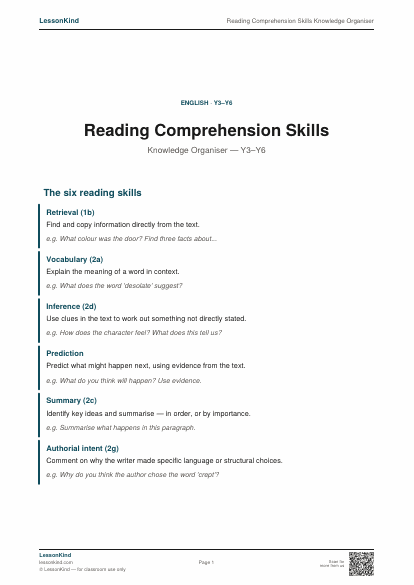
Reading Comprehension Skills Knowledge Organiser
A reference for the reading skills tested at KS2 — retrieval, inference, vocabulary in context, summary, comparison, and authorial intent — with question stems and strategies for each.
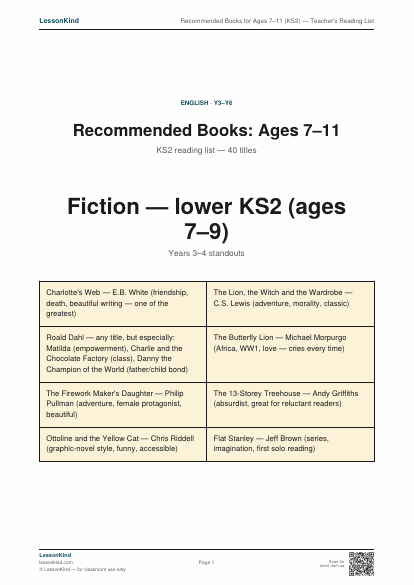
Recommended Books for Ages 7–11 (KS2) — Teacher's Reading List
A curated reading list of 40 novels, non-fiction books, and poetry collections for KS2 — annotated with reading age, curriculum links, and a sentence on why each book earns its place.
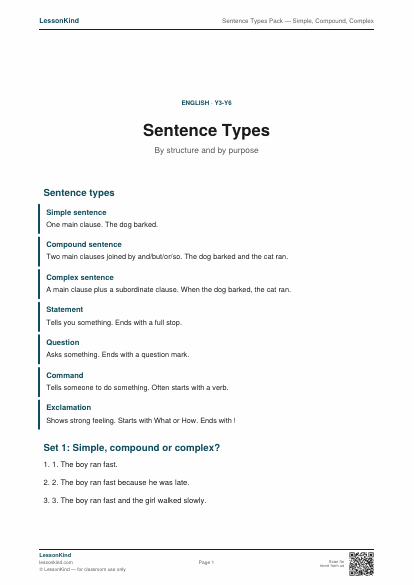
Sentence Types Pack — Simple, Compound, Complex
Sentence-types practice covering simple, compound and complex sentences plus the four sentence purposes (statement, question, command, exclamation). Upper KS2 focused.
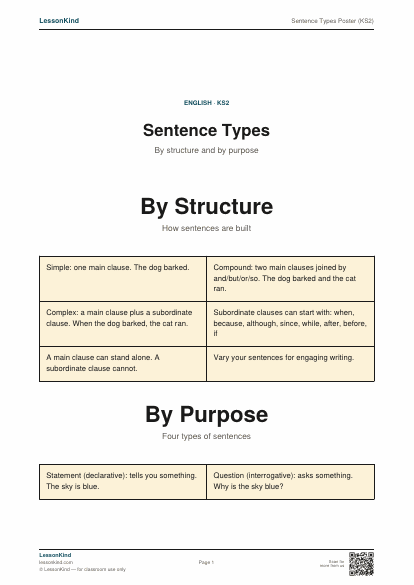
Sentence Types Poster (KS2)
Simple, compound, complex sentences, plus statements, questions, commands, exclamations. Reference poster for KS2 grammar.
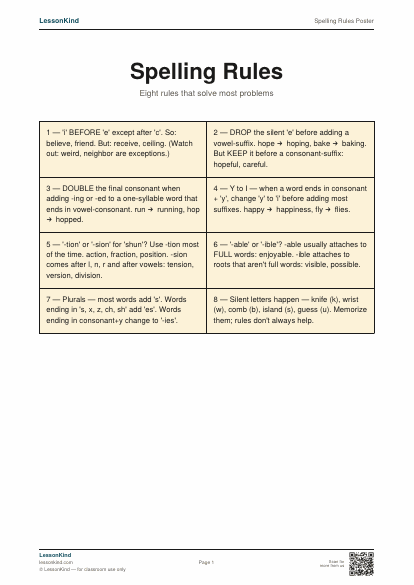
Spelling Rules Poster
Eight common spelling rules every elementary writer should know — i before e, doubling letters, and more.
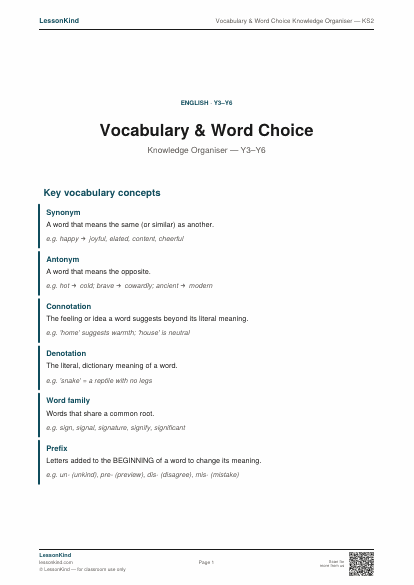
Vocabulary & Word Choice Knowledge Organiser — KS2
A KS2 vocabulary reference — word families, prefixes and suffixes, synonyms and antonyms, connotation and denotation, and how to make powerful word choices in writing.
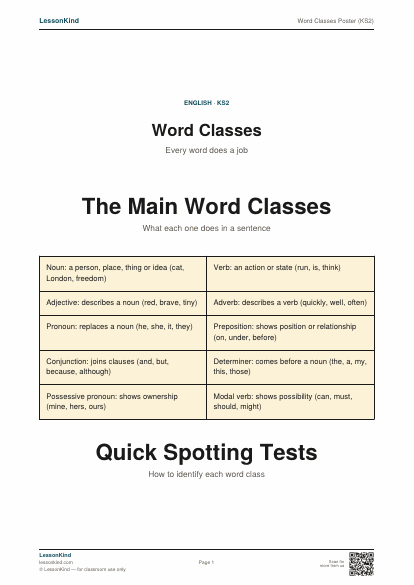
Word Classes Poster (KS2)
Reference poster for every word class on the KS2 SATs Grammar paper. Definitions, examples, and quick spotting tests for each class.
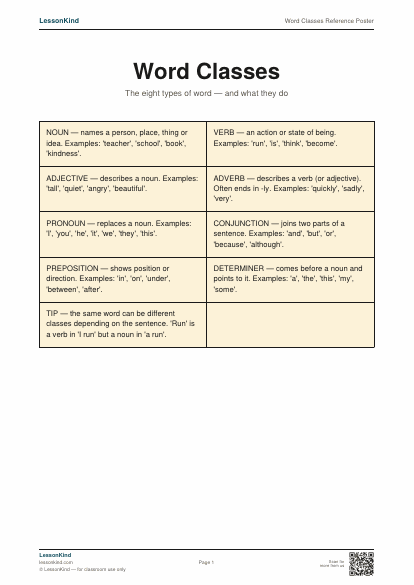
Word Classes Reference Poster
All major word classes — nouns, verbs, adjectives, adverbs, pronouns, conjunctions, prepositions — with examples.
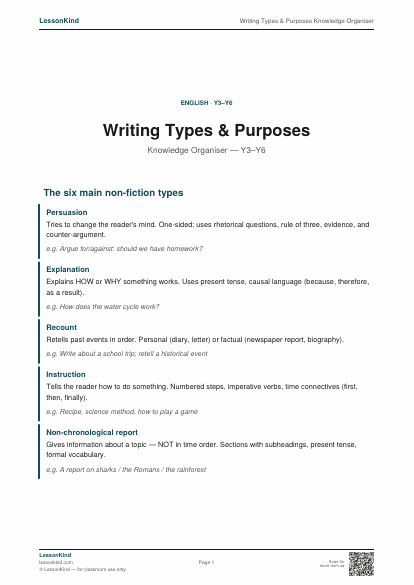
Writing Types & Purposes Knowledge Organiser
A KS2 reference for the main non-fiction writing types — persuasion, explanation, recount, instruction, report, and discussion — with purpose, audience, key features, and sentence starters for each.
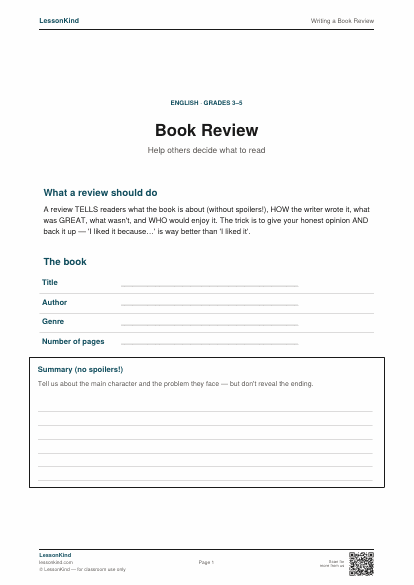
Writing a Book Review
Template for a book review — summary, characters, favorite part, who you'd recommend it to, star rating.
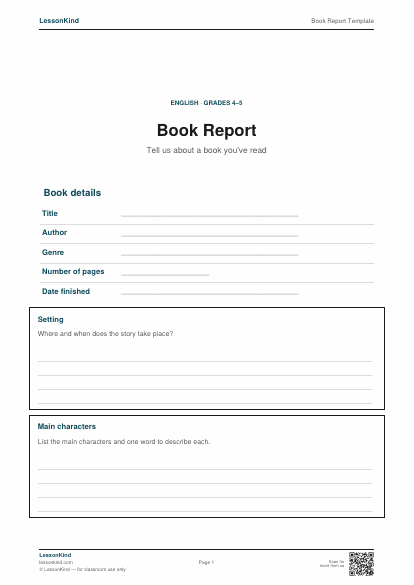
Book Report Template
One-page book report form with prompts for setting, characters, plot, theme and review.
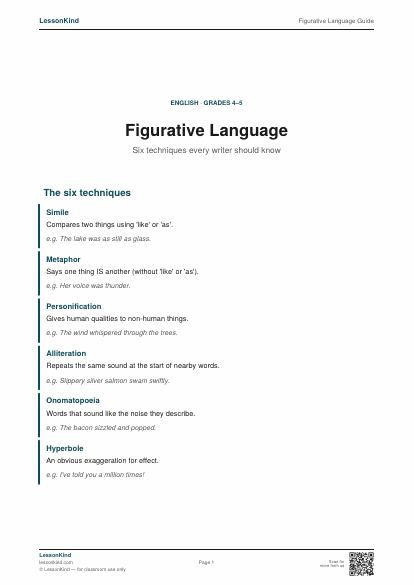
Figurative Language Guide
Similes, metaphors, personification, alliteration, onomatopoeia and hyperbole — with examples.
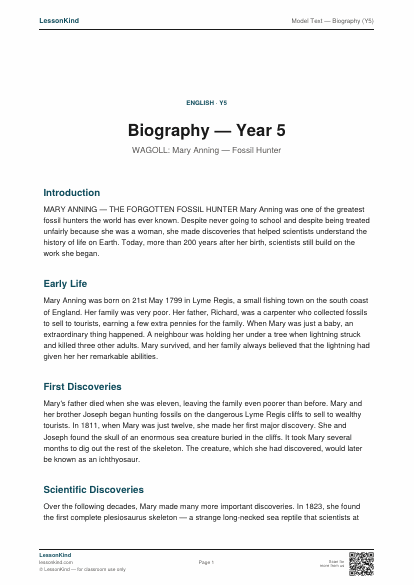
Model Text — Biography (Y5)
WAGOLL example of a Year 5 biography of Mary Anning, fossil hunter. Cross-curricular link to KS2 science (rocks and fossils). Demonstrates third-person past-tense biography structure with chronological organisation.
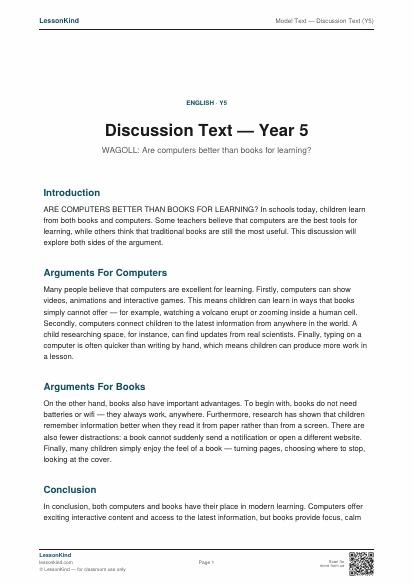
Model Text — Discussion Text (Y5)
WAGOLL example of a Year 5 discussion text — Are Computers Better Than Books for Learning? Demonstrates balanced both-sides structure, formal connectives, and a measured conclusion below the harder Y6 standard.
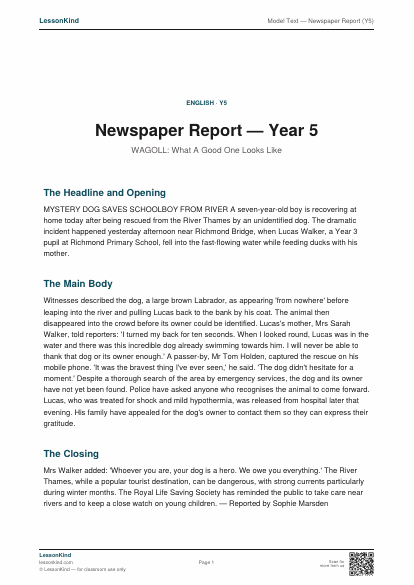
Model Text — Newspaper Report (Y5)
WAGOLL example of a Year 5 newspaper report on a fictional event. Demonstrates the inverted-pyramid structure, direct/reported speech, formal third-person voice, and journalistic conventions.
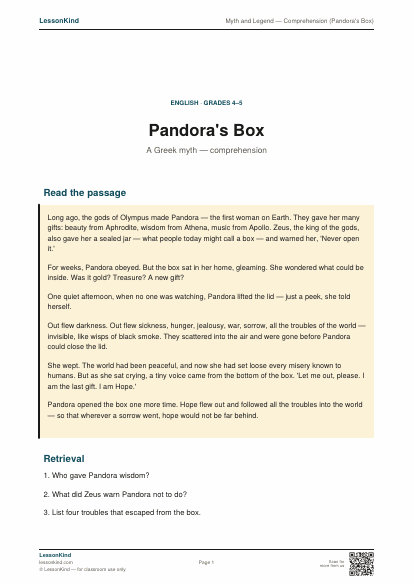
Myth and Legend — Comprehension (Pandora's Box)
Retold Pandora's Box myth (300 words) with retrieval, inference and language questions.
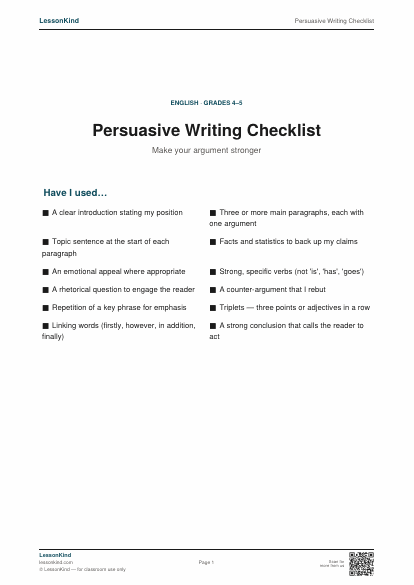
Persuasive Writing Checklist
Self-assessment checklist covering persuasive techniques and structural features.
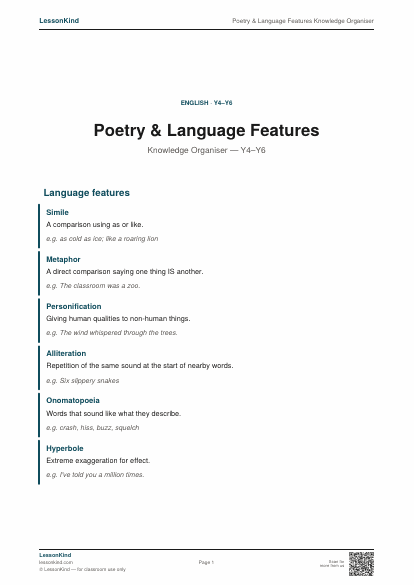
Poetry & Language Features Knowledge Organiser
A printable reference for poetry analysis — poetic forms, language features, structural techniques, and key terminology for analysing poems in KS2 and KS3.
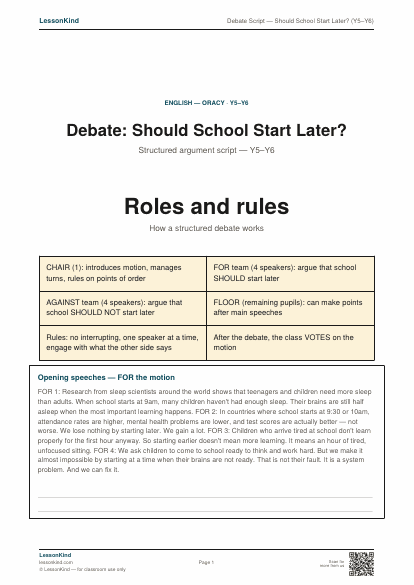
Debate Script — Should School Start Later? (Y5–Y6)
A structured persuasion debate script for upper KS2 — four speakers on each side, chair, and rebuttal round. Topic: should the school day start at 9:30 instead of 9:00? Teaches argument and counter-argument.
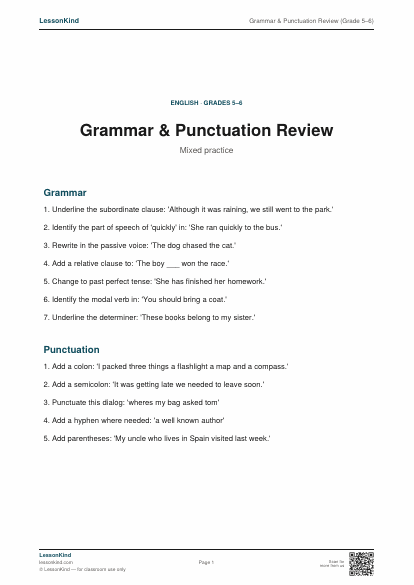
Grammar & Punctuation Review (Grade 5–6)
Mixed grammar and punctuation questions for upper-elementary review.
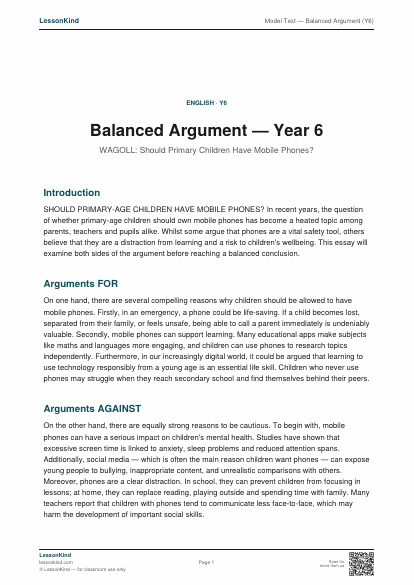
Model Text — Balanced Argument (Y6)
WAGOLL example of a Year 6 balanced argument essay — Should Children Have Mobile Phones? Demonstrates formal essay structure, both-sides reasoning, modal verbs, and a measured conclusion at SATs writing standard.
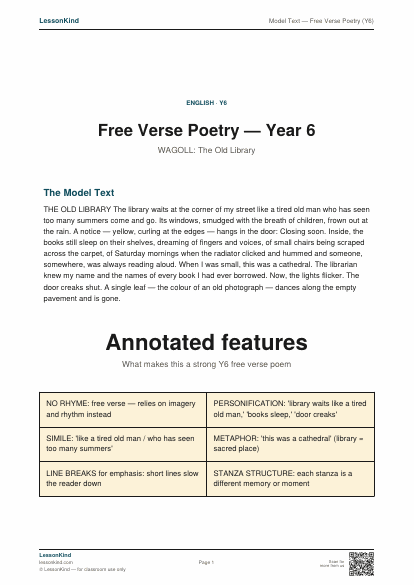
Model Text — Free Verse Poetry (Y6)
WAGOLL example of Year 6 free verse poetry — The Old Library. Demonstrates imagery, metaphor, line breaks, and emotional weight without rhyme. Useful for SATs reading and for poetry units.
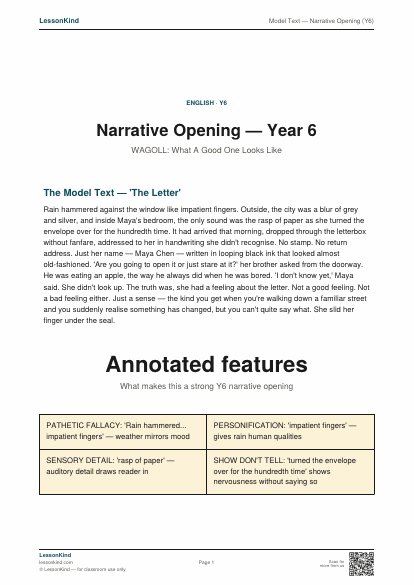
Model Text — Narrative Opening (Y6)
WAGOLL example of a Year 6 narrative opening — atmospheric, character-driven, with sophisticated sentence variety. Demonstrates show-don't-tell, dialogue, and 'pathetic fallacy' for SATs writing standards.
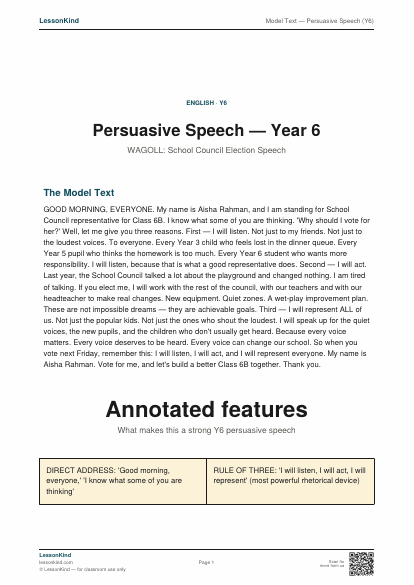
Model Text — Persuasive Speech (Y6)
WAGOLL example of a Year 6 persuasive speech — for school council election. Demonstrates direct address, rhetorical devices (rule of three, repetition, rhetorical questions), and pace control for spoken delivery at SATs writing standard.
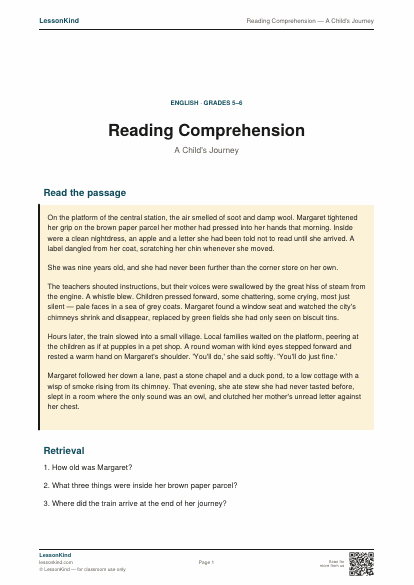
Reading Comprehension — A Child's Journey
Historical short story (350 words) about a child's wartime journey, with retrieval, inference and language questions.
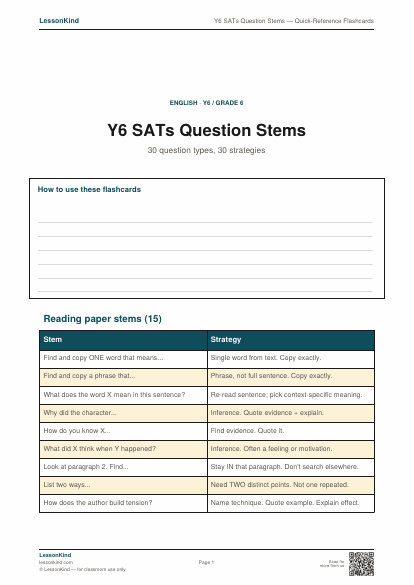
Y6 SATs Question Stems — Quick-Reference Flashcards
Flashcards covering the question-stem language that appears in SATs papers ('find and copy', 'how does the author', 'what does this word mean'). Children who recognise the question stems answer faster and lose fewer marks. Set of 30 stems with the strategy for each.
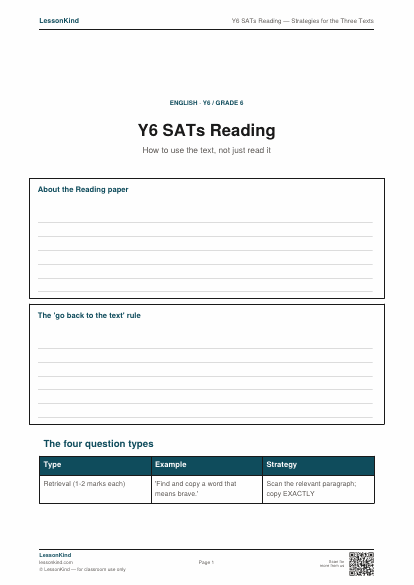
Y6 SATs Reading — Strategies for the Three Texts
The Reading paper is 1 hour, 3 texts of increasing difficulty, around 50 marks. This pack covers the question-type taxonomy (retrieval / inference / vocabulary / structure), pacing strategy across the three texts, and the 'how to use the text' approach that beats reading-from-memory.
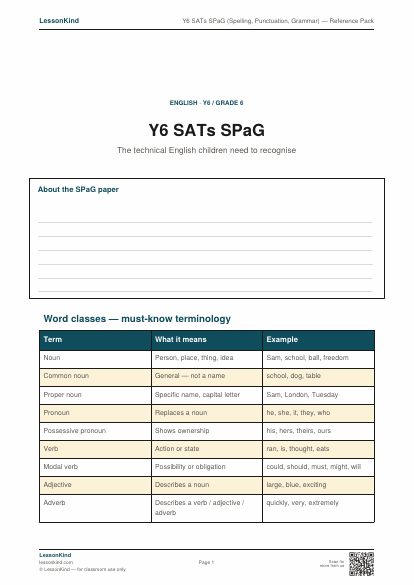
Y6 SATs SPaG (Spelling, Punctuation, Grammar) — Reference Pack
The SPaG paper tests technical English knowledge — terminology, punctuation use, grammatical structures. This pack covers the 30+ technical terms children must recognise, plus the punctuation and grammar rules that come up most often. The single revision document Y6 children should keep on their desk.
Y6 SATs Teacher Pacing Guide — Autumn to May
How to pace SATs prep across the academic year without burning the children (or yourself) out. Term-by-term breakdown of what to focus on, when to start past papers, when to slow down, and how to avoid the January-panic that derails so many Y6 teachers.