SEND & Inclusion
SEND & Inclusion for 1st
Practical strategies and resources for supporting children with special educational needs and disabilities — autism, ADHD, dyslexia, anxiety, and other common SEND needs in mainstream classrooms.
All resources
SEND Sensory Toolkit — What Teachers Actually Buy
The sensory tools that primary teachers actually buy and find useful — fidgets, ear defenders, wobble cushions, weighted lap pads, chew necklaces, time timers, calming spray. With honest notes on what works, what doesn't, and the difference between 'nice-to-have' and 'genuinely helpful'.
SENDCo — Professional Reading List
Professional books every primary SENDCo should have on the shelf — covering autism, ADHD, dyslexia, trauma-informed practice, EHCP writing, and parent partnership. Calibrated for the SENDCo who has 15 minutes a week to read.
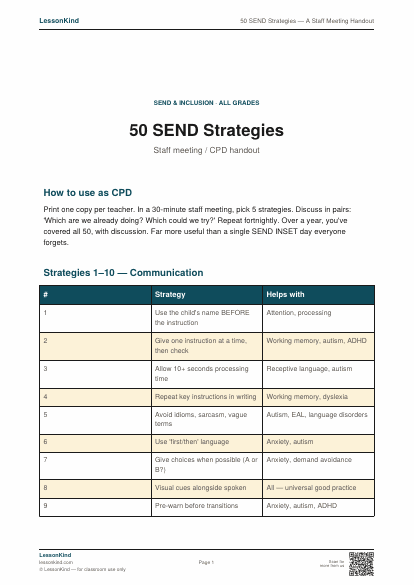
50 SEND Strategies — A Staff Meeting Handout
50 specific, named, takeaway-able strategies for supporting children with SEND in mainstream classrooms. Use as a CPD handout — discuss 5 a fortnight.
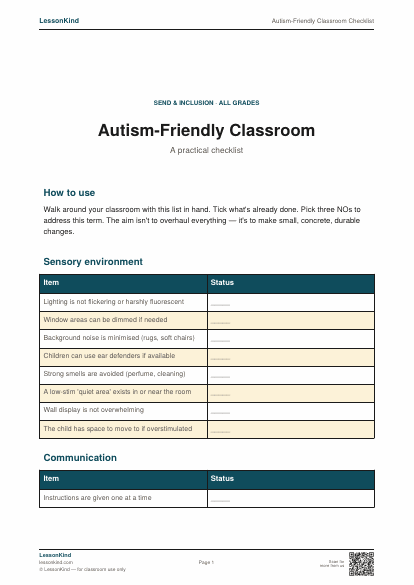
Autism-Friendly Classroom Checklist
A practical audit of the things that make a classroom genuinely welcoming for autistic children — sensory, communication, predictability, social.
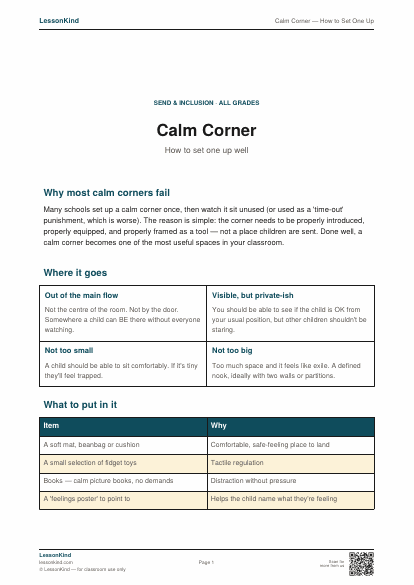
Calm Corner — How to Set One Up
How to set up a calm corner that actually gets used and actually helps — including what to put in it, how to introduce it, and the rules that make it work.
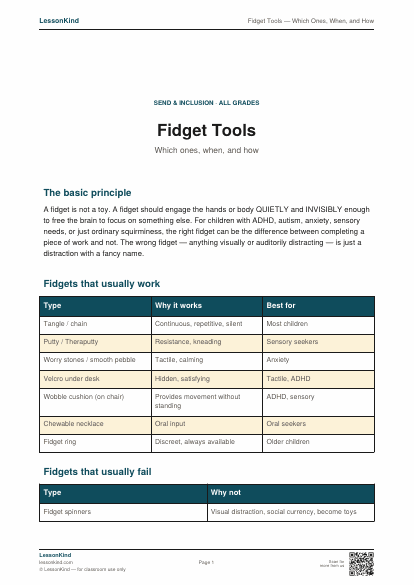
Fidget Tools — Which Ones, When, and How
Fidget tools: which ones genuinely help, which become distractions, how to introduce them, and how to handle 'I want one too'.
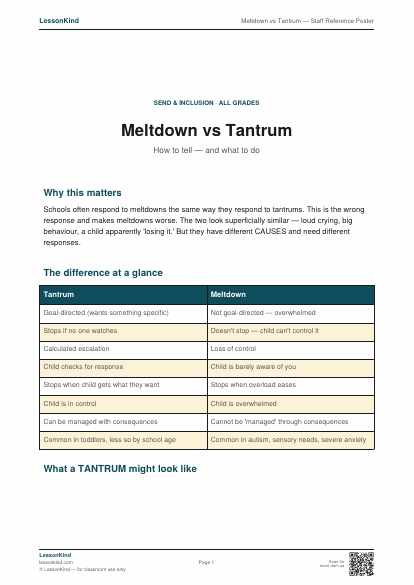
Meltdown vs Tantrum — Staff Reference Poster
A staff-room poster explaining the difference between a meltdown (sensory/emotional overload) and a tantrum (goal-directed behaviour). Hugely helpful for behaviour decisions.
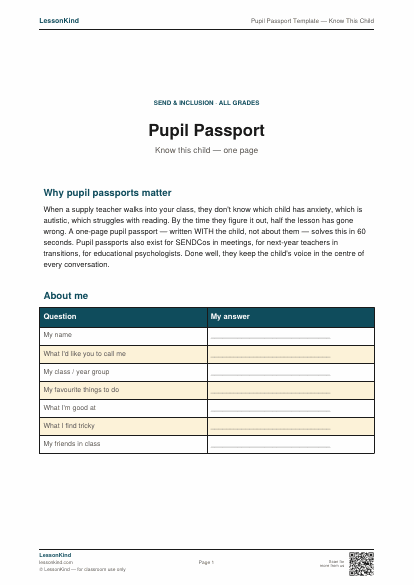
Pupil Passport Template — Know This Child
A one-page profile of a child with SEND — strengths, what helps, what doesn't, who to contact. Print one per child, share with supply teachers and TAs.
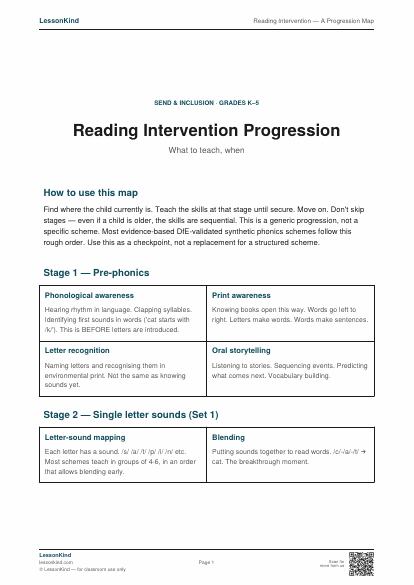
Reading Intervention — A Progression Map
A step-by-step progression for what to teach a struggling reader at each stage, from pre-phonics to fluency. Useful for class teachers, TAs and intervention leads.
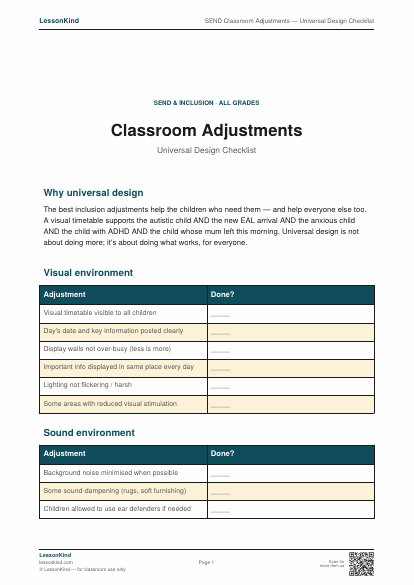
SEND Classroom Adjustments — Universal Design Checklist
A walk-through audit of adjustments that benefit children with SEND but help everyone else too. Audit your classroom in 15 minutes.
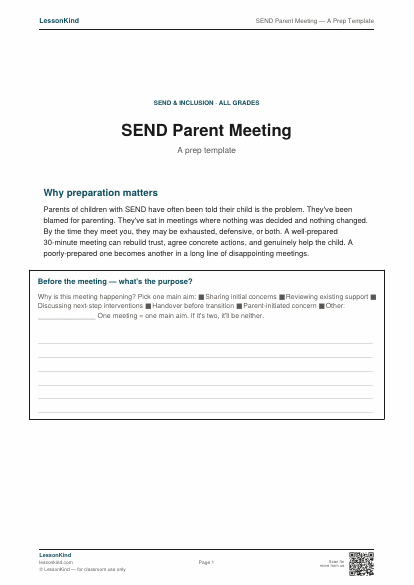
SEND Parent Meeting — A Prep Template
A template for preparing for parent meetings about a child with SEND — what to say, what to listen for, and how to leave with concrete next steps.
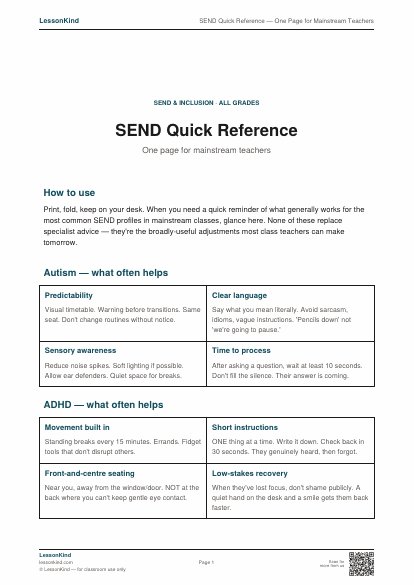
SEND Quick Reference — One Page for Mainstream Teachers
A one-page reference summarising the most useful adjustments for the four most common SEND profiles — autism, ADHD, dyslexia, anxiety. Print and stick on your desk.
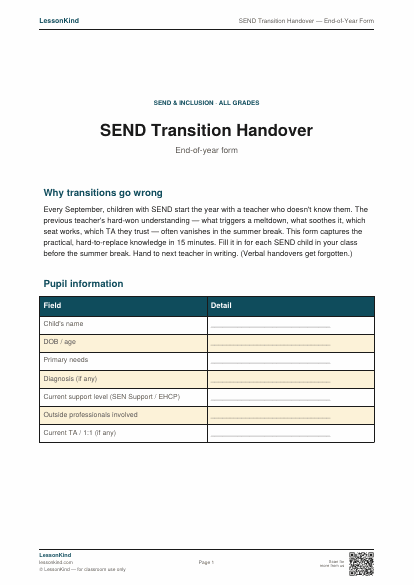
SEND Transition Handover — End-of-Year Form
A handover form for passing SEND information to a child's next teacher — strengths, what works, what to watch for, contacts. The information that often gets lost between July and September.
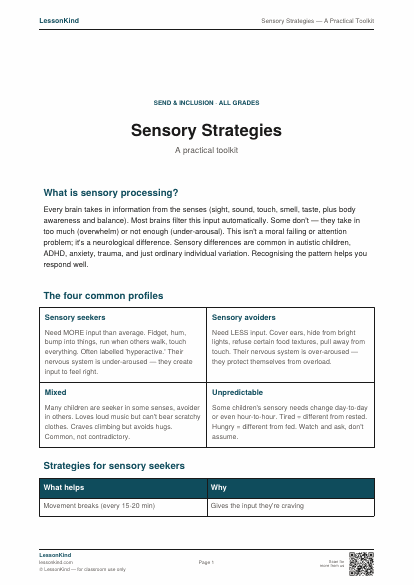
Sensory Strategies — A Practical Toolkit
Practical sensory strategies for the four common patterns — sensory seekers, sensory avoiders, mixed and unpredictable. With low-cost classroom kit ideas.
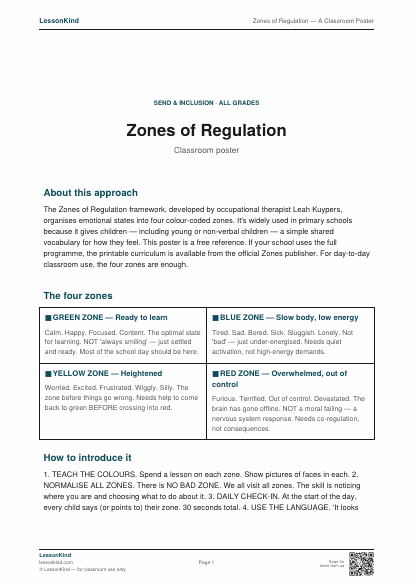
Zones of Regulation — A Classroom Poster
A four-zone emotional self-awareness poster widely used by occupational therapists and SENDCos. Print A3, laminate, refer to daily.
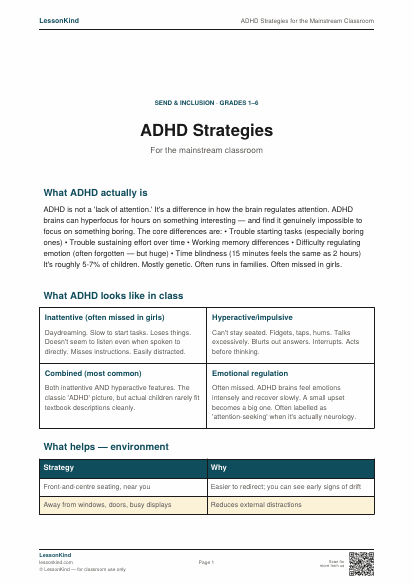
ADHD Strategies for the Mainstream Classroom
What ADHD actually looks like in primary school (it's not 'lack of focus'), and the practical strategies that consistently help in mainstream classrooms.
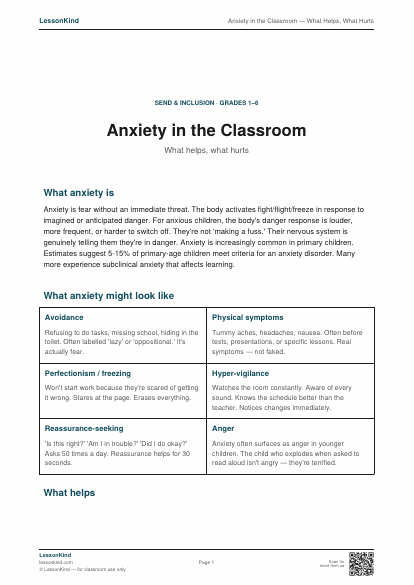
Anxiety in the Classroom — What Helps, What Hurts
Practical strategies for anxious children — including why reassurance often makes things worse, what to do during a panic moment, and the long view.
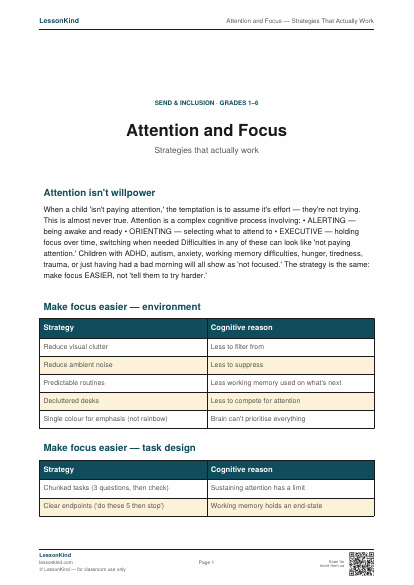
Attention and Focus — Strategies That Actually Work
Beyond 'pay attention!' — the practical things that actually help children with focus difficulties stay engaged, with reasoning grounded in cognitive science.
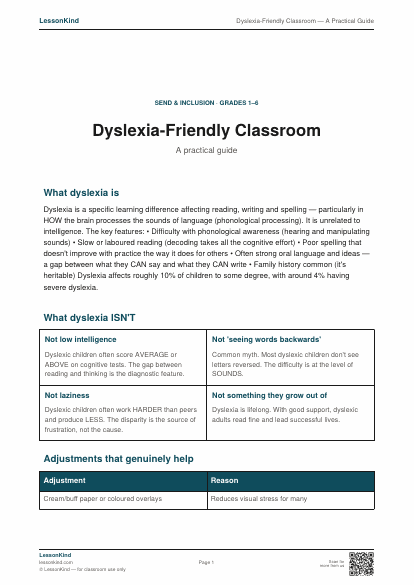
Dyslexia-Friendly Classroom — A Practical Guide
What dyslexia is and isn't, the most useful classroom adjustments, and the things that genuinely help dyslexic children access mainstream learning.
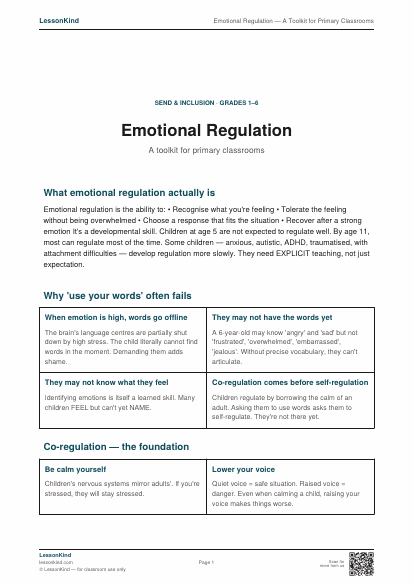
Emotional Regulation — A Toolkit for Primary Classrooms
How to teach and support emotional regulation in primary classrooms — including why 'use your words' so often fails, and what to do instead.